Tag Archives: Iran

Qatari Deal for Military Jets as the Gulf Crisis Persists

The Qatari and British governments have signed a “statement of intent” for the sale of 24 Eurofighter Typhoon combat jets from British defense group BAE Systems, worth several billion dollars in an attempt to bolster the gulf state’s military during the gulf crisis with its four other Arab neighbors. The statement of intent was made on September 17th, and would be the first major defense contract between the UK and Qatar.

The British Ministry of Defense said in a statement that the deal with their “strategic partner” has taken several years to negotiate. The ministry also stated that this deal would hope to enhance security within the region across all their gulf allies. This deal also is expected to support 40,000 jobs in Britain.

The fighter jets deal is a joint project between BAE Systems, France’s Airbus, and Italy’s Finmeccanica. The statement did not give the cost of the combat jet deal. However, in 2014 BAE agreed to supply Saudi Arabia with 72 Typhoon jets for $6 billion dollars.

Saudi Arabia, the United Arab Emirates, Bahrain, and Egypt broke off ties with Qatar on June 5th, accusing the state of supporting terrorist  organizations and attempting to destabilize the region. They have launched an economic boycott stopping Qatar airways fights from using their airspace, closing off the land border with Saudi Arabia, and blocking its shipments from their ports.

The four Arab nations set a list of 13 demands.  Some of these demands include limiting diplomatic ties to Iran, shutting down the state-funded Al-Jazeera news network, severing ties to all terrorist organization, including the Muslim Brotherhood and Hezbollah, shutting down the Turkish military base, handing over terrorist figures, and aligning its foreign and defense policy with that of its fellow Gulf Cooperation Council member states.

Qatar has continued to deny its close relationship with Iran as well as funding terror organizations.

Qatar is a relatively small nation of about 2.3 million located on the Arabian Peninsula into the Persian Gulf. It has the highest per capita income in the world due to its extensive natural gas reserves. Qatar’s own military is relatively small for the region, the army is estimated to be around 12,000 troops.

Shortly after the Gulf crisis began, on June 14th the United States approved a $12 billion-dollar deal with Qatar  to sell F-15 fighter jets, even though President Trump has accused the nation of supporting terrorism and sided with the Saudi-led bloc. Earlier in November of 2016 under the Obama administration there was a $21.1 billion dollar deal  already in the works, and the current deal under the Trump administration added to the number of jets in production. The previous deal approved the possible sale of up to 72 F-15 aircrafts.

The Qatari air force is estimated to only contain 12 operational jets and their air force consists of 1,500 individuals. The number of jets under the deals of the British and Americans raise questions about Qatar’s intentions. Both deals have been under work for years, but the timing of the announcements are clearly intended to send a message regarding Qatar’s relationship with the western posters.

The Qatari government’s fighter jet buying spree is best understood in the context of Qatari efforts to bolster support from western powers during the blockade.

The gulf crisis between Qatar and its neighbors came to the fore beginning in 2011 during the Arab Spring, as Qatar and its neighbors found themselves on different sides of various Islamist-led uprisings in the region. In particular the UAE began to blame Qatar for backing the Muslim Brotherhood, which the UAE alleged was in engaged in subversive activities. In 2013 Qatar was accused of breaching the Gulf Cooperation Council (GCC) security agreement of failing to commit to promises of not interfering in the internal affairs of the fellow GCC states and of harboring hostile media, referring to Al-Jazeera.

In March of 2014, Saudi Arabia, the UAE and Bahrain suspended diplomatic ties with Qatar due to their support for the Muslim Brotherhood. Later in November of 2014, after 8 months of tension and frozen relations with Saudi Arabia, UAE and Bahrain, agreed to return their ambassadors, ending the suspension of diplomatic ties.

The British have been attempting to mediate the crisis with Kuwait. Foreign Secretary of England, Boris Johnson, in a statement said that “the security of the gulf is our security” and that the British will remain deeply committed to the stability of the entire region.  The United States on the other hand is split with how to align.

President Trump has previously declared that the blockade “hard but necessary,”  and overtly criticized Qatar for its role in terror finance, but other Trump administration officials have sent mixed messages, including Secretary of State Rex Tillerson. Tillerson is perceived as having sided with Qatar, a country with which he has a long history of cooperation during his time as CEO of ExxonMobil.

Although the crisis is unlikely to lead to an armed conflict, the United States needs to keep an eye on the increase in Qatar’s military deal making.

Another factor to consider is that Qatar is  home to the largest U.S. military base in the region. Qatar’s al-Udeid Air Base,  is a crucial staging ground for U.S. operations in Syria, Iraq and Afghanistan, and is one of several American military outposts across the Gulf that are intended to serve as a bulwark against Iran but now put Washington in a delicate balancing act.

The base is home to an estimated 11,000 U.S. Military personnel and was built in the 1990s. Qatar invested over $1 billion to construct the base, in an attempt to facilitate a deeper cooperation with U.S. military.

As the Qatar-Gulf crisis persists, it is unclear how the blockade will be resolved.

United States and the United Kingdom, have chosen to tread lightly with Qatar, largely due to Qatar’s role in the energy market and its perceived importance as a military staging ground for counterterrorism efforts.

Qatar’s arms deal diplomacy must not be allowed to distract from the central issue. Trump Administration officials need to stand behind the president’s decision that Qatar must alter its behavior. Both the U.S. and its Western allies, including Britain, ultimately cannot tolerate Qatar’s support for terrorism, and its intentional destabilization of the Middle East/North Africa region.


Baghdad Expels Kirkuk Governor, as Kurdish Independence Referendum Nears

On September 14th the Iraqi parliament voted to remove the governor of the Kurdish controlled region of Kirkuk from office, at the request of Iraqi Prime Minister Haider al-Abadi. Governor Najmaddin Kareem, along with other Kurdish legislators from all factions boycotted the session. The Governor has been a very vocal supporter of Kurdish independence.

On August 29th councilors in the Iraqi province of Kirkuk voted to take part in the September 25th Kurdish independence referendum. The referendum is intended to survey the Kurdish population on whether Kurdish Regional Government will remain part of Iraq or eventually begin pursuing independence of their own state. The central government of Iraq has continued to express strong opposition to the referendum.

The Iraqi parliament voted against Kurdish plans to hold an independent referendum toward establishing an independent Kurdistan on September 12th.  The Iraqi Parliament and Prime Minister al-Abadi deemed the referendum “unconstitutional,” in an attempt to preserve Iraq’s existing borders.

American, British, German and French Officials, together with U.N. representatives held a meeting with KRG president Barzani on September 14th after the parliament voted to remove the governor, offering to find an  alternative to having the referendum in late September.

The Kurdish President Barzani said in a statement that Kurdish leadership will only be ready to accept an “alternative” that better achieves the Kurdish objective of independence. One western ally who is in support of the referendum is Israel, the United States close ally. Prime Minister Benjamin Netanyahu made a statement supporting the establishment of the Kurdish state.

Earlier on August 22nd,United States Defense Secretary General Mattis asked the Kurdish Regional government to postpone the referendum after talks with Prime Minister Abadi in Baghdad. Abadi expressed his support for Iraq’s territorial integrity, according to a statement issued by the prime minister’s office.

With the prospects of an independent Kurdistan, Western countries leading the anti-Islamic State coalition fear a direct vote from the Iraqi Kurdish electorate on this public question since the potential for conflict with the central government in Baghdad would divert attention away from the fight against the Islamic State.

President Massoud Barzani, of Kurdish Regional Government claims that he wants to pursue independence though dialogue without provoking conflict. He also made a statement saying that the referendum will be held on time despite the vote by Iraqi Parliament which deemed the referendum unconstitutional as well as the removal of Kirkuk Governor Kareem. The Kurdish president also stated that the vote would not have any impact, on their fight against the Islamic State.

The Kurdish Regional Government (KRG) is dominated by two Iraqi Kurdish factions which are the Kurdistan Democratic Party (KDP) and the Patriotic Union of Kurdistan (PUK.) The current President of Iraq, Fuad Masum,  is a member of the PUK, while the President of the KRG is member of the KDP.

The majority of PUK members are located toward the southwestern areas of the KRG bordering Iran, while the KDP members are in the North of the KRG. The KDP controls a majority of the Kurdish regional parliament.

The Kurds numbered around 30 million people and are widely recognized to be the largest stateless national group in the world. While Kurds are known for its strong cultural unity, Kurdistan is home to numerous languages, religions and political factions.

After World War I nation state boundaries were created along geographic, rather than ethnic or linguist lines. Iraq, Turkey, Iran and Syria oppose the idea of Iraqi Kurdish independence, fearing separatism could spread to their own Kurdish populations. The Kurds currently make up about 20% of the Iraqi population.

The city of Kirkuk is an ethnically mixed and oil rich province, however, it is not formally a part of the Kurdish autonomous region. Kirkuk is administratively dependent on Iraq’s central government, while security is provided by Kurdish forces.

Kirkuk is one of the most disputed territories of the Iraqi government.  The province of Kirkuk is estimated to have around 600,000 people with a highly diverse ethnic makeup. Although, the last full census of Iraq was in 1987 so the numbers are unclear of the current demographic breakdown.

Kurds made up a majority of the city, after Saddam Hussein’s rule despite a campaign by Hussein to force large numbers of Kurds from Kirkuk and replace them with Sunni Arabs.

The ethnic makeup of the city is now in dispute.  The PUK demands the incorporation of Kirkuk into the Kurdish region during the referendum of the establishment of the independent state.

The northern region of Iraq is oil rich. The potential for conflict with Baghdad is heightened if independent Kurdistan establishes and claims Kirkuk under their territory.  Kurdistan holds 40%  of Iraq’s oil reserves. Kurdish leaders establishing the region in world oil markets is a crucial step toward eventual independence.  Even if the Kurds do not claim Kirkuk as part of their proposed independent state, the large oil reserves make a conflict possible if Kurdish independence is declared.

In 2011 Exxon Mobil saw possibility for profit in the Iraqi Kurdish region, and Ashti Hawrami, the oil minister from the region signed a deal then  Exxon’s chief executive, Rex Tillerson, the current U.S. Secretary of State.

In 2015 the KRG said it had been forced to bypass Baghdad  and begin exporting oil directly. The current and former Iraqi central governments have both said the Kurds have failed to respect deals to transfer agreed volumes of oil to Baghdad.

Exxon leased 6 blocks scattered around the autonomous region, one near Turkey, one near the Iranian border, and the rest along the line that divides The Kurdish Regional Government and Iraq. This deal was highly controversial, as the Obama administration opposed the deal, aligning with former Iraqi President Maliki and his “one Iraq” policy.

In December of 2016 Exxon pulled out of three of the six exploration blocks in the Kurdish Sulaimaniyah province,  partly in response to a growing Iranian influence in the area. Kurdish sources claim Iran established of a Islamic Revolutionary Guards Corps base in the area in 2016.

The KRG is entitled to 17% of Iraqi’s overall budget, and argued it needed stable revenues to pay its bills, support over a million of refugees fleeing the war in Syria and finance its Peshmerga forces fighting against the Islamic State.

The KRG was exporting over 550,000 (bpd) of oil in 2015.

With tensions from both the Iraqi, Iranian, and Turkish governments over the Kurdish region specifically regarding oil production and the movement of Kurdish forces, the United States needs to be wary that the declaration of the Kurdish state is likely to invoke a reaction.

[Update:] Kurdish President Masoud Barzani made a statement after the Iraqi Parliament voted to remove Governor Kareem from Kirkuk on September 14th saying “The escalation in the Iraqi parliament has left no room for negotiations with Baghdad.” This statement was made after the Kurdish parliamentary members boycotted the vote. Governor Kareem rejected the decision of his removal describing it as “invalid.”

The Iran Deal’s Backers Are Getting Desperate

Originally published at National Review

Supporters of the 2015 nuclear deal with Iran, otherwise known as the JCPOA, are worried. They know President Trump is on the brink of refusing to certify the agreement to Congress next month and withdrawing from it. To stop this from happening, they have come up with a series of desperate and deceptive arguments to convince the president to stick with the deal, despite its deep flaws.

Fortunately, there is a far better and more responsible alternative: a compelling strategy drafted by Ambassador John Bolton to withdraw the United States from the JCPOA and implement a more coherent Iran policy.

Mr. Trump was right when he said during the presidential campaign that the JCPOA is the worst international agreement ever negotiated, since it allows Iran to continue its nuclear-weapons program by permitting it to enrich uranium, operate and develop advanced uranium centrifuges, and run a heavy-water reactor. The limited restrictions that the deal imposes on Iran’s enrichment program will expire in eight years. And in the meantime, its inspection provisions will remain wholly inadequate.

Although the JCPOA did not require Iran to halt its belligerent and destabilizing behavior, President Obama and Secretary of State John Kerry repeatedly claimed it would lead to an improvement in that behavior. This has not happened. Instead, Iran has become an even more belligerent and destabilizing force since the deal was announced in 2015. It stepped up its ballistic-missile program. It upped its support of terrorism and sent troops into Syria. And it increased its aggression in the Persian Gulf and the Red Sea, as the Houthi rebels — its proxy in Yemen — continued to fire missiles at U.S. and gulf-state ships.

As Trump considers withdrawing from the JCPOA, its backers are promoting several dubious arguments in an effort to keep it in place. These include:

1. Argument: The IAEA says Iran is in compliance with the JCPOA. Although it is true that a September 1, 2017, IAEA report did not cite any Iranian violations of the deal, and IAEA director general Yukiya Amano has said Iran is meeting its JCPOA commitments, according to an analysis by the Institute for Science and International Security, “the [IAEA] report is so sparse in details that one cannot conclude that Iran is fully complying with the JCPOA.” The Institute also notes that, “nowhere in the report does the IAEA state that Iran is fully compliant.”

In addition, Iran refuses to allow IAEA inspectors access to what it deems to be military sites, a major violation. After Amano suggested in a speech on Monday that the IAEA could obtain access to Iranian military sites if necessary, an Iranian official made clear that that was not the case, stating that “Mr. Amano, his agents and no other foreigners have the right to inspect our military sites, because these sites are among off-limit sites for any foreigner and those affiliated with them.”

2. Argument: Iranian violations of the JCPOA are minor and “not material.” Iran-deal backers have tried to downplay Iranian violations, including those spelled out in a July 11 letter from Senators Tom Cotton (R., Ark.), Ted Cruz (R., Texas), David Perdue (R., Ga.), and Marco Rubio (R., Fla.) to Secretary of State Rex Tillerson, as minor and “not material breaches.” The truth is that these violations are significant. The four senators also noted that German intelligence reported covert cheating by Iran in 2016 and 2017.

But even if one accepts the arguments of JCPOA supporters who dismiss Iranian violations, the compliance issue is a red herring, since Tehran can advance its nuclear-weapons program by continuing its uranium-enrichment and heavy-water-reactor operations without running afoul of the deal. Moreover, when most of the deal’s restrictions expire in eight years, Iran will be able to massively expand its nuclear program with the international community’s blessing.

3. Argument: President Trump should decertify the JCPOA to Congress but remain in the agreement so we can spend several years trying to fix it. Worried that a U.S. withdrawal from the nuclear deal will anger European leaders, some JCPOA supporters have proposed that the president state he is not certifying the agreement to Congress on the October 15 deadline, but the U.S. will remain in the deal to start negotiations to amend it. After the president’s “decertification,” JCPOA supporters contend Congress could re-impose U.S. sanctions lifted under the deal.

This is a dishonest argument for several reasons. First, it makes no sense to remain in an agreement that the president has determined is not in America’s national interests. Second, the idea that the U.S. should remain a party to the JCPOA to fix it later is actually a clever argument to keep us in the deal for good, since Iran’s ruling mullahs have made it clear they will never agree to amend it. And third, JCPOA supporters know that if President Trump decertifies the deal without withdrawing from it, Senate Democrats will use the filibuster to block the restoration of any sanctions lifted by the agreement.

4. Argument: The JCPOA provides the IAEA with important inspection opportunities that will be lost if the agreement is terminated. Although it is true that the IAEA has conducted more inspections of Iran since the deal came into force, the agency is not permitted to inspect the locations where nuclear-weapons work is thought to actually be occurring: military sites. Without the “any time, any place” inspections that the Obama administration originally promised, the deal allows Iran to easily conceal covert nuclear-weapons activities from IAEA inspectors.

5. Argument: The JCPOA should be put on the backburner while the U.S. implements a broader strategy to confront Iran. Defense Secretary Jim Mattis, Secretary of State Rex Tillerson, and National Security Adviser H.R. McMaster reportedly proposed an aggressive new strategy this week to confront the whole range of threats posed by Iran in the Middle East while recommending that Trump keep the U.S. a party to the nuclear deal. While a new comprehensive Iran strategy is urgently needed, remaining in a fraudulent nuclear agreement that allows Iran to press ahead with and expand its nuclear program would leave the most destabilizing issue out of this strategy. Any such plan would thus fail to improve Iranian behavior.

The JCPOA’s backers don’t want to talk about the only credible alternative: Ambassador John Bolton’s strategy, “Abrogating the Iran Deal: The Way Forward,” which he revealed in an NRO piece on August 28 after White House and National Security Council staffers blocked him from personally presenting it to the president. Bolton’s plan is a far more effective, comprehensive, and multilateral approach to the threats posed by Iran. It includes strict new sanctions to bar permanently the transfer of nuclear technology to the Islamic Republic and new sanctions in response to Tehran’s sponsorship of destabilizing terrorism in Syria, Iraq, Yemen, and other Middle East countries.

I am encouraged by recent statements from former White House chief strategist Steve Bannon and former deputy assistant to the president Sebastian Gorka that President Trump wants to get out of the JCPOA and probably will not certify it to Congress next month. I also believe that Ambassador Bolton has given President Trump the careful strategy to leave the nuclear deal that his senior officials refused to provide. I therefore am optimistic that the president will abrogate this terrible agreement over the next 30 days.

If that happens, the JCPOA’s defenders can be expected to fight until the last minute, employing their misleading arguments in cooperation with allies in the mainstream media and at foreign-policy think tanks. Already, supporters of the nuclear deal within the Trump administration are circulating stories in the press to pressure the president and create the impression that this decision is likely to go their way.

I sincerely doubt President Trump will be fooled by the desperate and misleading arguments being made by JCPOA supporters. He promised during the campaign to make America safe again. The best way to do that is to stand his ground, withdraw from the Iran nuclear agreement, and implement the Bolton Plan.

Israeli air strike on Syrian weapon facility

On September 7th Israel attacked a military site linked to the production of chemical weapons, in Syrian’s Hama province. The strike, launched from Lebanese airspace, reportedly killed two Syrian army personnel and caused material damage to the facility. The Israeli military has declined to comment on the attack.

The Israelis were apparently responding to reports that Hezbollah’s leader Hassan Nasrallah asked the Syrian military to hand over the facility to the Iranian-backed terrorist group when he visited Damascus last week.

Al-Talai Scientific Studies and Research Center is known for research and development of Syrian chemical weapons and short to long-range missile systems. The site was also suspected of being used for Iranian missile production.

The location of the facility near the town of Masyaf is significant, because it is 30 miles away from a Russian air base. Russian presence in Syria has played a large role in the civil war for military, intelligence and strategic aid to the Syrian government.

Russia and Israel have kept communication channels open regarding activity in Syria. The recent airstrike makes clear that Israel will not allow a Russian presence to deter necessary action.

Since the beginning of the civil war in Syria, Israel has conducted multiple strikes against the Assad regime and Hezbollah targets, however, this strike was the first time that Israel targeted a formal Syrian facility.

The northern border in Israel remains the most volatile. The movement of Hezbollah closer to the northern Israeli border, strengthening ties with Iran, and increasing their weapon stockpile and production capability are some of Israel’s “red lines” to act against Hezbollah.  Israel has no interest in entering the civil war in Syria, however, this specific strike is a signal from Israel to Syria that they will not allow  Iran and Hezbollah to continue to build their capabilities.

Weapons being constructed at this research facility may have been intended for transfer to the terror organization, as part of an Iranian effort to expand weapon and missile production for Hezbollah’s arsenal.

The air raid came a day after a UN probe found the Syrian government responsible for the chemical attack in April in northern Syria that killed more than 89 people and injured another 540.  It was not immediately clear if the facility struck Thursday was used for the production or storage of chemical weapons that were fired in April.

Iran has backed the Lebanese terrorist organization, Hezbollah, whose main focus against Israel has shifted in recent years due the Iranian-led intervention in Syrian civil war. Hezbollah is fighting on the ground to combat rebels such as the Islamic Front in the southern border with Assad’s regime.

In 2006 Hezbollah and Israel fought a brief armed conflict, in which 55 people died and there were around 1,400 injuries, however, a new conflict between them could be much larger scale.

Hezbollah, with Iranian support, has been building up weaponry in the case of future Hezbollah/Israeli conflict. In July of 2017 a factory in northern Lebanon   was being constructed to manufacture Fateh 110 medium-range missiles, which can reach most of Israel and carries a 500 kilogram warhead. A second factory is being built on Lebanon’s southern coast. One reason for the new construction is that Israel has successfully interdicted a number of shipments of weapons from Syria. Hezbollah is estimated to possess around 100,000 rockets and missiles  mostly provided through Iranian funds.

Hezbollah continues to violate United Nations Security Council Resolution 1701, which prohibits the smuggling of arms and the construction of weapons. UN peacekeepers are at the border to prevent moving personnel, and weapons near the border of northern Israel, however, the UN has taken no action to stop Hezbollah. Some of these violations if progressed could lead to border conflict.

Another contributor to consider is Russia. In 2006 Russia was not a presence during the 2006 conflict, but a future conflict on the northern border of Israel it could spill over into Syria.  Hezbollah and Russia are strategic allies, who have provided the terror group with weapons and intelligence.

Although the possibility of regional conflict between Hezbollah and Israel may be heightened after the strike, it is not likely absent a Hezbollah attack on Israeli civilians.

Is al-Shabaab shipping uranium to Iran?

On August 31st, in a letter to the U.S. Ambassador Somalia’s foreign minister, warned that Al-Shabaab forces have captured areas in the centrally located, Galmudug region of Somalia, where surface-exposed uranium deposits  can be found.

According to the report al-Shabaab is looking to strip mine triuranium octoxide for transport to Iran. Yellowcake uranium used in the preparation of nuclear reactors, is composed of about 70-90% triuranium octoxide. When this uranium is processed it can be enriched into isotope U-235 and processed to yield weapons-grade uranium.

The Somali foreign minister urged intelligence and military assistance to halt shipments of uranium compounds to Iran. The State Department did not dispute the statement, but refused to comment.

The relationship between Iran and al-Shabaab is deserving of close attention. One of Iran’s primary commercial shipping routes runs through the Arabian sea, via the Gulf of Aden, passing directly by Somalia. In 2006, the Iranian government reportedly attempted to supply the insurgent Islamic Courts Union (ICU) militia with weapons in exchange for uranium deposits, in violation of a 1992 UN arms embargo. Iran later denied supplying weapons or receiving uranium from Somalia. The Islamic Courts Union youth wing was al-Shabaab.

Al-Shabaab became an independent organization, split from the ICU, and aligned with al-Qaeda in 2012. Al-Qaeda since 9/11 has continued to receive support from Tehran and after the U.S. invasion of Afghanistan in 2001 many al-Qaeda terrorists fled to Iran. Iran’s defense budget ranges from $14-$30 billion  and funds go to supporting terrorist organizations and insurgent fighters.

In 2016 the United Nations Security Council expressed concern  over an Iranian shipment of arms to Somalia, and denounced Tehran’s efforts to obtain substantial amounts of uranium from Somalia in return for supplying weapons to al-Shabaab.

Trade between the Iranian and Somalian government from 2016 has increased by 38% and Iran exported $30 million dollars in goods to Somalia in the past year.

Under the Iranian nuclear agreement written under the Obama administration, prohibits the enrichment of uranium, which is presumably the purpose of the Iranian pursuit of triuranium oxide. The deal requires that Iran’s uranium stockpile is kept under 300 kg of up to 3.67% enriched uranium hexafluoride, which is what triuranium oxide is converted to. Procuring triuranium oxide illicitly from a designated terrorist group is one way for the Iranians to continue to feed their nuclear program in contravention of the Iran deal.

Al-Shabaab translated means “the youth.” The jihadist terrorist organization seeks to overthrow the Somali government and impose sharia law on the country. It is designated as a U.S. foreign terrorist organization and labeled as Africa’s deadliest terror group in 2016 with over 4,200 accounted deaths in that year.  Al-Shabaab was believed to have between 6,000 and 12,000 fighters in 2016, dominating control over many rural areas in southern Somalia. The group is to have historically financed its operations by extracting valuable resources from territory it holds and there is no reason to believe they would not also attempt to do so with superficial uranium deposits as well.

JCPOA Noncompliance — A Totalitarian Imperative

Originally published at Newsmax

Democracies have a blind faith that treaties can disarm totalitarian regimes. The notion that “peace in our time” is possible through a scrap of paper is an irrational addiction in Washington, D.C., the opioid of the U.S. State Department.

The free world is free because it has laws and contracts, and an ideological imperative to believe in the efficacy of negotiation and compromise. The totalitarian world is not free because its laws and contracts are lies, merely a propagandistic means to the end of tyranny, where the ideological imperative is to enslave.

Never the twain shall meet. But the free world never learns war cannot be outlawed by the Kellogg-Briand Pact of Aug. 27, 1928 or, just as absurdly, a world without nuclear weapons achieved by negotiating with North Korea an Agreed Framework (1994) or with Iran a Joint Comprehensive Plan Of Action (JCPOA, 2015).

Perhaps the best warning against JCPOA is the long, failed history of arms control.

True believers in JCPOA should read two books, Barton Whaley’s “Covert German Rearmament 1919-1939: Deception and Misperception” and John Jordan’s “Warships After Washington.” Both books describe cheating by Nazi Germany and Imperial Japan on the Versailles Treaty of June 28, 1919, the Washington Naval Treaty of  Feb. 6, 1922, the London Naval Treaty of April 22, 1930, and the Second London Naval Treaty of March 25, 1936.

Also read “The President’s Unclassified Report to the Congress on Soviet Noncompliance with Arms Control Agreements” (Released Feb. 1, 1985) wherein is described the USSR’s cheating on the major arms control agreements of the Cold War. The State Department is still sitting on the even more shocking classified version.

Now, Clare Lopez, a former CIA clandestine services officer who is vice president for research and analysis at the Center for Security Policy (CSP), one of the best Washington, D.C. think tanks, has written the definitive study titled “Why Trump Must Not Re-Certify Iranian JCPOA Compliance.” (Center for Security Policy, Aug. 23, 2017).

Lopez has deep expertise in the ideology of radical Islam that drives the Islamic Republic of Iran and their Islamic Revolutionary Guard to be the world’s leading sponsors of international terrorism — and why development of an Islamic Bomb is an ideological religious imperative for Iran.

The mullahs who run Iran, and the fanatical Islamic Revolutionary Guard Corps who run Iran’s nuclear and missile programs, will never betray Allah by surrendering their Islamic bomb — the most powerful weapon for material and spiritual victory in their global jihad.

Failure by the U.S. State Department to understand the ideological motives behind Iran’s nuclear missile program is repeating State’s catastrophic misunderstanding that the ideological imperatives of totalitarianism made inevitable North Korea’s cheating on former-President Bill Clinton’s Agreed Framework.

Totalitarian Iran and North Korea, despite profound ideological differences, are strategic partners in a nuclear missile “axis of evil” because the free world is even more abhorrent to Tehran and Pyongyang than each other.

Key Findings from Clare Lopez’s “Why Trump Must Not Re-Certify Iranian JCPOA Compliance”:

—”It is imperative that President Trump not recertify the Iranian regime as compliant with the provisions of the Joint Comprehensive Plan of Action (JCPOA) when the next deadline comes due in October 2017;”

— “Tehran is explicitly and demonstrably out of compliance with the JCPOA on numerous specific counts'”

— “The nature of the Iranian regime is self-avowedly jihadist per its own constitution, which   declares the objective of the regime is global conquest by an Islamic State under rule of Islamic Law (shariah) – thus, its nuclear weapons program is a means to achieve that objective;”

— “The Iranian regime is signatory to a host of international conventions and treaties but has a documented record of violations that lends little credence to its JCPOA pledges;”

— “The Iranian regime most notably violated the Nuclear Non-Proliferation Treaty (NPT) for at least 14 years before getting caught and publicly revealed with a clandestine nuclear weapons program in 2002.”

— “The International Atomic Energy Agency (IAEA) documented a long list of so-called Possible Military Dimensions (PMDs) related to the Iranian nuclear program in November 2011 that strongly suggest its assessment that Iran had an advanced nuclear weapons program and possibly nuclear warheads at that time;”

— “More recent revelations demonstrate that the Iranian regime continues to work on nuclear warheads and explosive charges to initiate the implosion sequence of a nuclear bomb at clandestine sites off-limits to IAEA inspections;”

— “Even after the July 2015 JCPOA, the Iranian regime has been confronted with credible information that it is operating more advanced centrifuges than permitted, exceeding limits on production of heavy water, and covertly procuring nuclear and missile technology outside of JCPOA-approved channels: these are all material breaches of the JCPOA;”

— “The Iranian regime’s nuclear weapon and ballistic missile ‘Joint Venture’ with North Korea dates back at least to the 1990s and continues currently with especial concern about the sharing of expertise on warhead miniaturization and Electromagnetic Pulse (EMP) technology;”

— “Denial of recertification of Iranian compliance with the JCPOA must be the first step in a complete review of the nuclear and ballistic missile threats from both Iran and North Korea.”

Mr. President, don’t let Iran become another North Korea. Tear-up the JCPOA!

READ GAC REPORT EXECUTIVE SUMMARY HERE (PDF)

Peter Vincent Pry is executive director of the Task Force on National and Homeland Security. He served in the Congressional EMP Commission, the Congressional Strategic Posture Commission, the House Armed Services Committee, and the CIA. He is author of “Blackout Wars.” For more of his reports, Go Here Now.

Iran Is Not Complying with the Nuclear Deal

Per the Iran Nuclear Review Act of 2015, the Trump administration is required to certify to Congress every 90 days that Iran is in compliance with the July 2015 nuclear deal (the Joint Comprehensive Plan of Action, or JCPOA) and that this agreement is in the national-security interests of the United States. The next certification is due on July 17, 2017.

It is crucial that the Trump administration, in the next JCPOA certification statement, correct the gross error it made in April, when it certified that Iran was complying with this agreement and that the JCPOA is in the national-security interests of our country. Unfortunately, the administration reportedly might make this same mistake again.

The April certification went against Mr. Trump’s accurate statements during the presidential campaign that the JCPOA was one of the worst agreements ever negotiated and that there was clear evidence of Iran’s failing to meet its obligations under the agreement as well as cheating. Although many Trump officials opposed the April certification — and this decision to certify appeared to irritate President Trump — State Department careerists succeeded in convincing Secretary of State Rex Tillerson to agree to certify anyway. Press reports yesterday indicated that President Trump will grudgingly agree to certify Iranian compliance again but could change his mind.

Senators Tom Cotton (R., Ark.), Ted Cruz (R., Texas), David Perdue (R., Ga.), and Marco Rubio (R., Fla.) made it clear in a July 11 letter to Secretary Tillerson that they do not want this to happen again and cited four ways Iran is not complying with the nuclear agreement:

One. Operating more advanced uranium-enrichment centrifuges than is permitted and announcing the capability to initiate mass production of centrifuges. (Although I agree with this concern, the U.S. should not have agreed to let Iran enrich any uranium while the JCPOA is in effect, never mind enrich it with advanced centrifuges. This is one of the JCPOA’s most serious flaws.)

Two. Exceeding limits on production and storage of heavy water, a substance needed to operate plutonium-producing heavy-water nuclear reactors. (Again, I agree, but the U.S. should not have agreed to a pact that allows Iran to produce heavy water or operate a heavy-water reactor.)

Three. Covertly procuring nuclear and missile technology outside of JCPOA-approved channels. There’s direct evidence of this, from German intelligence reports.

Four. Refusing to allow IAEA inspectors access to nuclear-research and military facilities.

Incredibly, a State Department official said at a recent Washington lunch I attended that the department is trying to determine whether Iran is in “material breach” of the JCPOA, not whether it is in full compliance. This means that the State Department is well aware that Iran is not complying with the nuclear deal, but is trying to find ways to discount these violations. This kind of diplomatic hairsplitting seems to violate the Iran Nuclear Review Act, which mandated that the administration certify whether Iran is or is not in compliance with the JCPOA.

Many in the foreign-policy establishment, and some Republican experts, have promoted a similar dodge by arguing that the Trump administration “strictly enforce” the JCPOA instead of withdrawing from it or substantially renegotiating it. This course of action would validate the Obama administration’s dangerous concessions to Iran on uranium enrichment, heavy water, and other issues. In addition, under the JCPOA, U.N. sanctions can be “snapped back” only in the event of “significant non-performance” by Iran, and a vote by a majority of the agreement’s parties (U.S., U.K., France, Germany, Russia, China, and Iran). I believe there is zero chance the British, French, and Germans would ever vote with the Trump administration to reimpose U.N. sanctions on Iran through the JCPOA process, regardless of the seriousness of Iran’s violations of the pact.

The four senators said in their letter that even if we ignore Iran’s violations of the JCPOA, continuation of the current policy “would be tantamount to rewarding Iran’s belligerence,” noting that Iran continues to wage a campaign of regional aggression, sponsor international terrorism, develop ballistic missiles, and oppress the Iranian people. I would add to this the fact that the JCPOA lifts sanctions from Iranian terrorists and terrorist entities.

The letter also claims that, regardless of whether every Iranian violation of the JCPOA can be chronicled, the senators doubt whether the U.S. could, under current arrangements, determine with high confidence that Iran’s nuclear-weapons program has ceased. One reason for this is the exemptions, in secret side deals to the JCPOA, that have not been made available to Congress as required by the Iran Nuclear Review Act. The Trump administration should release these side deals immediately. (Click here to read my September 30, 2016, NRO Corner piece listing known JCPOA side deals.)

Meanwhile, the Trump administration’s 90-day review of U.S. Iran policy, which was supposed to be completed this month, might not be finished for a few months. The recent reports that the administration will certify Iranian compliance over the next few days might be occasioned by the expectation that a final decision will occur after the policy review is issued, and in the next certification decision in October.

If these reports are true, this is preposterous. The case to declare that Iran is in noncompliance with the JCPOA is not a close call. It is outrageous that pressure from the foreign-policy establishment and European officials might convince the Trump administration to continue to prop up this fraudulent agreement. I am also worried that, because the Trump administration has not filled any government posts that deal with this issue, these certification decisions indicate that pro-JCPOA government careerists placed in key national-security jobs by the Obama administration have seized control of the review process to protect the JCPOA, regardless of strong evidence of Iranian noncompliance and cheating.

I therefore urge senior Trump officials to take control of the JCPOA process and fulfill Mr. Trump’s campaign promises regarding this dangerous agreement. This should include:

One. Informing Congress this month that Iran has violated the JCPOA and that this agreement, as currently structured, is not in the national-security interests of the United States.

Two. Issuing the Iran-policy review ASAP with a conclusion that the United States cannot be a party to a nuclear agreement that allows Iran to enrich uranium and operate a heavy-water reactor, fails to require any-time, any-place inspections, does not require Tehran to resolve all outstanding questions about its past nuclear-weapons work, fails to include a halt to Iran’s ballistic-missile program, and does not require Iran to cease its belligerent behavior and sponsorship of terrorism. As a result, the review should call for the JCPOA to be terminated or substantially renegotiated.

Three. Filling national-security jobs across the government, especially Senate-confirmable positions that deal with controversial issues such as the JCPOA. The president cannot fully implement his foreign-policy agenda until his people are in place in the bureaucracies of State, the Pentagon, and other agencies. There also should be a house-cleaning at State, the Pentagon, the CIA, and the Office of the Director of National Intelligence to reassign partisan careerists placed in sensitive jobs by the Obama administration who have been working against — and in many cases leaking — to undermine the Trump administration.

An honest declaration by the Trump administration that Iran is not complying with the nuclear deal and that this agreement is not in the national-security interests of the United States will do more than fulfill one of the president’s top campaign promises. It also would be a major step toward Mr. Trump’s assuming control of U.S. foreign policy from pro-Obama careerists and reversing President Obama’s disastrous policies. This must be followed by an aggressive effort by the White House to fill vacant political national-security jobs as soon as possible.

New Center Monograph Shows Continuity of Islamic Warfare

Modern_Islamic_Warfare

The Islamic State may be on its way to defeat, but the brutal savagery of Islamic warfare, which has been with us for nearly fourteen centuries, is not about to exit the world stage just yet. Because the commandment to global conquest by jihad is obligatory for all Muslims today just as for those of the 7th century—until the world ‘be all for Allah’ (Q 8:39)—Islamic warfare of both the violent and stealthy kind will never cease unless forcibly defeated. Until now, however, few had delved deeply into the merciless, systematic, and ongoing methods of classic Islamic warfare that date back to medieval times to understand the nature, the concepts, and the philosophy that combined with such deadly effectiveness to defeat brilliant civilization after brilliant civilization, from the Byzantines to the Hindus to the Persians.

We of Western Civilization (along with the Han Chinese) remain among the only peoples on earth ever targeted by Islam for conquest but not yet subjugated. If we are going to prolong that happy circumstance, we will need to examine the cultural, military, political, and religious currents within Islam that inspire its relentless drive for supremacy. Only by understanding what compels Islam to conquest and the means employed to achieve it will we have a chance to avoid the fate of myriad lost civilizations gone before us which were crushed under the onslaught of Islamic forces. Nor did the Amazigh, Byzantines, Copts, and so many others fall only to Muslim warriors on the field of battle: then as now, asymmetric means, deceit, and guile played their part. 21st century jihad in the Dar al-Harb—the non-Islamic West—is being fought as often as not with asymmetrical means: airliners brought down with explosives secreted in a laptop; the individual jihadi suicide bomber; the car, the gun, the knife.

To help us recall these lessons of the past and understand their relevance for societies fighting to remain free today, the Center for Security Policy is pleased to present the newest monograph in its “Terror Jihad Reader Series”: Modern Islamic Warfare, by Dr. Harold Rhode. This publication explains how the deep Islamic faith and implacable ruthlessness of this enemy shape his tactics and strategy on both the kinetic and civilizational jihad battlefields. Dr. Rhode, who earned a Ph.D. in Islamic History, specializing in the history of the Turks, Arabs, and Iranian peoples, also studied in universities in Iran, Egypt, and Israel. He speaks Arabic, Farsi, Hebrew, and Turkish, and served as an advisor in the U.S. Department of Defense for many years.

He brings to this new monograph a breadth and quality of scholarship that is increasingly rare these days.

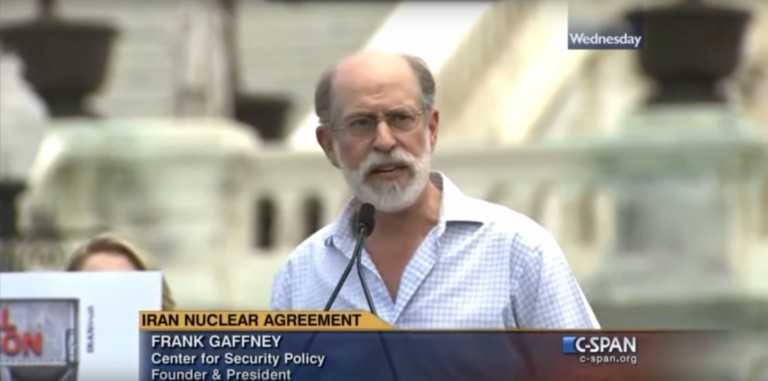
Dr. Rhode joined Center President Frank Gaffney for a lively discussion on the eve of the book’s release:


Iranian missile factories in Lebanon

Reports show that the Islamic Revolutionary Guard Corps (IRGC) is building underground facilities for Hezbollah.  These facilities, which have been reported on as far back as March, are said to be 50 meters below ground to protect from potential Israeli airstrikes.

The factory located in northern Lebanon is said to be manufacturing Fateh 110 missile’s, a short-range surface-to-surface missile with a range of approximately 190 miles.  That range can threaten most of Israel.  The second factory is supposedly manufacturing small arms.

Center adjunct-fellow, Caroline Glick highlights Hezbollah’s growing belligerence her recent column:

Not only is Hezbollah building a missile industry. It is deploying its forces directly across the border with Israel – in material breach of UN Security Council Resolution 1701 from 2006, which set the terms of the cease-fire between Israel and Hezbollah at the end of the Second Lebanon War.

The missile facility is a marked upgrade in Hezbollah’s weapons manufacturing abilities.  Additionally, Hezbollah’s has also been battle hardened, having fought in Syria for the past several years.

Last month, Hezbollah chief Hassan Nasrallah raised the bar on his rhetoric, calling for fighters from different regions to join forces, saying the next war with Israel could “open the way for thousands, even hundreds of thousands of fighters from all over the Arab and Islamic world to participate – from Iraq, Yemen, Iran, Afghanistan and Pakistan,”

Intentional or not, this situation will only escalate.  Israel would do well to take decisive action to neutralize this growing threat.

Hamas faced with electricity Crisis but Egypt offers to help

The Israeli government cut electricity to Gaza Sunday night at the request of the Palestinian Authority (PA), which seeks to apply pressure on Hamas, its political rival. Palestinian president Mahmoud Abbas is from ruling Fatah party, which is an arch-rival of Hamas.

Hamas has controlled Gaza strip for the last decade since violently seizing control in 2007.  A PA spokesman stated PA plans to serve the people in Gaza and called Hamas to turn over all the responsibilities of government in that region back to PA.

For the last decade, due to the internal rivalry, Palestine has not had a congressional or presidential election. PA is trying to exert pressure on Hamas by refusing to pay their electricity bill.

Egypt is taking advantage of the opportunity and has offered Hamas relief in the electricity crisis in exchange for returning 17 wanted men charged by Egypt on terrorism, halting smuggle of weapons in Sinai, and information on militants’ activities in Gaza that use underground tunnels.

Gaza has already had chronic power shortages with 12 hours a day supply for residences. PA informed Israel in April that it would only pay $25 million of the $40 million of monthly electricity bill for Gaza.

Israel provides about 30% of Gaza’s electricity.  Currently, Gaza has power for about four to six hours. Business, household water supply, and medical facilities are all impacted with this crisis. The World Bank has called this a humanitarian disaster.

It is not clear how Egypt would be able to assist Gaza with its power crisis. Under best conditions, Egypt can provide 6% of electricity to Gaza for a full day of usage. However, according to Israel Defense Forces, Egypt has had malfunctions with its power equipment, which have caused it incapable of providing power to Gaza lately.

Hamas threatened Israel by stating that reduction in power would have “disastrous and dangerous results.

President Netanyahu distanced Israel from the power crisis calling it an internal dispute between Hamas and PA where Hamas and PA disagree as to who should pay the electricity bill for Gaza. Netanyahu also indicated that the Israelis do not intend to escalate with Hamas.

Since 2013, when Egypt’s Muslim Brotherhood government under President Mohammed Morsi was overthrown, relations between Egypt and Hamas have deteriorated. The Muslim Brotherhood is  parent organization to Hamas, and the Egyptian government holds Hamas responsible for supporting Muslim Brotherhoodbacked terror attacks in the country.

Egypt does not trust Hamas, but Hamas attempted to soften Egyptian anger at Hamas by claiming to distance themselves from with Muslim Brotherhood focusing on their role as a Palestinian movement intent on fighting only Israel.

The current Gulf crisis has made the situation more difficult for Hamas.  Saudi Arabia, United Arab Emirates, Egypt, and other Gulf states have cut ties with Qatar accusing it of funding terrorist organizations. Qatar was a source of political and financial funding for Hamas.

Iran is a source of support for Hamas for many years, despite a brief interruption during when Hamas’ support for Syrian rebels frustrated the Iranian regime.

Will Hamas survive the political, social, and financial squeeze that is currently faced? It appears that Hamas is being cornered from different directions, and it’s losing allies in the region. The PA is working aggressively against it by undermining its presence in Gaza strip. Israel’s decision in cutting Gaza’s power can potentially raise the dissatisfaction among Palestinians against Hamas.

Interestingly, Aljazeera, a Qatar state controlled media organization known for its favorable reporting of various terrorist groups including Hamas questioned whether or not Hamas will be able to face this new storm.

Qatar is under pressure to distance itself from Hamas, and its own terror ties are currently the focus of the international community. Furthermore, Hamas is trying to publicly distinguish itself from Muslim Brotherhood that is the backbone of its financial, political, and militia support. Despite their differences in Syria, the recent developments may bring Hamas and Iran back in closer alliance as they both are being alienated by Arab nations. This strategy may allow Hamas to survive as it goes through the choppy waters of isolation in the Middle East.