Tag Archives: Iran

First anniversary of Iran nuclear deal marred by massive cheating

Expect the Obama administration to take more victory laps this week by claiming Iran has complied with the Joint Comprehensive Plan of Action (JCPOA), the nuclear deal that reaches its first anniversary on July 14. However, recent press reports paint a very different picture, one that confirms its critics’ worst fears: massive Iranian violations of the agreement.

In an annual security report issued this month, German intelligence said Iran made a clandestine effort last year to acquire illicit nuclear technology and equipment from German companies at a “quantitatively high level,” and that “it is safe to expect that Iran will continue its intensive procurement activities in Germany using clandestine methods to achieve its objectives.” A German intelligence agency reported 141 clandestine Iranian attempts to acquire nuclear and missile technology in 2015 versus 83 in 2013.

According to a July 7 memo from the Institute for Science and International Security, Iran recently tried, unsuccessfully, to covertly purchase tons of high-strength carbon fiber, which it uses to make rotors for uranium enrichment centrifuges. Under the JCPOA, Iran is required to seek approval for such purchases from a JCPOA procurement working group. The Institute said the JCPOA group probably would not have approved this sale, since Iran has enough carbon fiber to replace the rotors of centrifuges it is permitted to operate under the agreement.

In a separate report, the Institute said many Iranian entities that had been sanctioned for illicit nuclear and missile procurement but were relieved of these sanctions by the JCPOA in January “are now very active in procuring goods in China.”

Many other troubling reports indicate the JCPOA is much worse and much weaker than its critics believed. These include:

Exempting China’s redesign and rebuilding of the Arak heavy-water reactor from the JCPOA procurement process.

• Iran placing military facilities off-limits to International Atomic Energy Agency (IAEA) inspectors.

• The Iranian parliament approving a much weaker version of the agreement.

• IAEA members voting to “close the file” on the Iranian nuclear weapons program, even though Iran failed to cooperate with an investigation that found its nuclear weapons work hadcontinued at least until 2009.

• The IAEA dumbed-down its reports on Iran’s nuclear program to such an extent that it is difficult for anyone outside of the IAEA to know if Iran is complying with its JCPOA obligations.

• Iran has continued to test ballistic missiles capable of carrying nuclear warheads, even though President Obama said when the JCPOA was announced that Iran, under the agreement, would comply with U.N. Security Council resolutions barring missile tests for eight years.

As serious as these issues are, the Obama administration is ignoring them, insisting the nuclear deal is a success because Iran has complied with it. The truth is that the JCPOA was negotiated entirely on Iran’s terms. As a result, Tehran made easily reversible concessions on its nuclear program that allow it to shorten the timeline to a nuclear bomb while the agreement is in force.

Making this situation worse, Secretary of State John Kerry is trying to make more U.S. concessions to Iran – such as granting Iran access to the U.S. financial system – and the White House has become a “lobbying shop” to encourage American and international firms to do business with Iran.

I predict in my new book, Obamabomb: the Fraudulent Nuclear Deal With Iran, that the Obama administration will become “Iran’s lawyer” by defending it against its alleged violations of the JCPOA, just as it did concerning Iranian cheating during the nuclear talks in 2014 and 2015. This was evident last week when State Department spokesman John Kirby struggled to dismiss recent reports that Iran was trying to acquire illicit nuclear technology.

The JCPOA is national security fraud. The best way for the next president to deal with it is to tear it up on his or her first day in office.

Given Donald Trump’s denunciation of the nuclear deal as one of the worst international agreements in history, I am confident that, if he becomes president and sticks to his promise to renegotiate the JCPOA, he will either scuttle the deal or negotiate a stronger one that responsibly addresses the nuclear and other security threats posed by Iran. Obamabombincludes a list of nine principles to guide a Trump renegotiation of the Iran deal if he wins the presidential election.

On 1-Year Anniversary of JCPOA, Iranian Nuclear Deal Faces Criticism

On July 14th, 2015, the United States agreed to one of the most impactful nuclear deals in its history. The Joint Comprehensive Plan Of Action (JCPOA) was a complex plan that allowed Iran access to nuclear research and some kinds of nuclear energy and enrichment processes. At its outset, the plan was critically acclaimed by President Barrack Obama and members of his administration. Despite this appraisal, the JCPOA faced heavy criticism from Congressional officials and the public. Regardless, the deal was approved by President Obama and his staff one year ago, today.

Since the signing of the deal, Iran has continued to engaged in behaviors, that some would consider aggressive and contrarian toward the spirit of the agreement. Former intelligence official and vice-president of the Center for Security Policy, Fred Fleitz, addressed some of these activities in a presentation on his recently published book Obamabomb: The Fraudulent Nuclear Deal With Iran. 

Fleitz outlines his security and legal concerns surrounding the JCPOA. Among them are the ability for Iran to maintain its heavy-water reactor, secret side deals with Iran which the Administration supported without informing the U.S. Congress in direct contravention of the Corker-Cardin amendment, the lack of an IAEA oversight of access to Iran’s ballistic and cruise missiles programs (also known as  Possible Military Dimensions), and the access that Iran has received to the U.S. financial system as a benefit of the deal, despite being a known sponsor of terrorism. Fleitz discussed all of these issues at a recent Capitol Hill briefing.

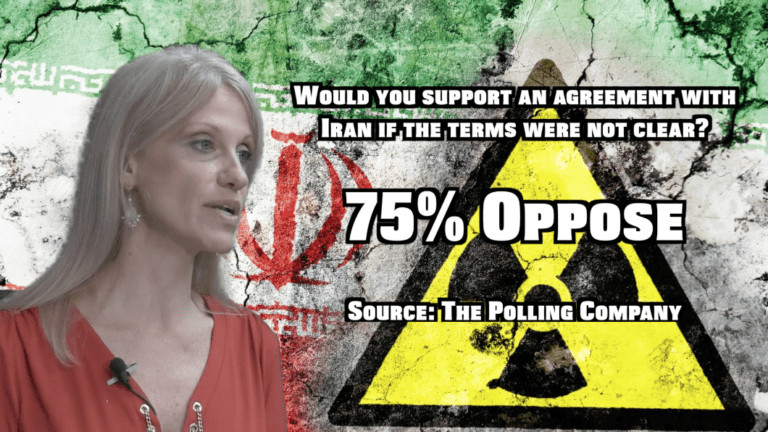
With his experience in the CIA, DIA, and House Intelligence Committee, Fleitz described the deal as both dangerous and fraudulent, and began his discussion by noting that the Iran agreement was approved despite less than a quarter of the American public supporting it. Fleitz then described how the U.S. was forced to provide overwhelming concessions to Iran in order to strike a deal. These concessions included removing the heavy water reactor from the sites the JCPOA could inspect, disallowing United States sanctions against Iran to be implemented while the deal was in place, including sanctions regarding human rights violations, and the removal of IAEA inspection into the possible military dimensions of Iran’s past behavior.

Ultimately, Fleitz noted the danger of these concessions were only magnified in light of recent international findings and events. In January, 2016, Iran captured and imprisoned several US midshipmen who were moving through Iranian waters. They were intensely interrogated and detained for several days until a 1.7 billion dollar payment was made to allow their release. Second to this issue were German intelligence reports that described clandestine efforts of Iranian spies to acquire nuclear technology from German companies in 2015. With such aggressive behavior and reports following the nuclear deal, it is clear that Iran is not adhering to even the modest requirements the deal was intended to impose.

Fleitz argues that with these activities illustrate that Iran does not appear to be thwarted or deterred from hostility despite the deal. In fact, he argues that the JCPOA has emboldened Iran to become more aggressive and hostile.

On this anniversary of the Iran nuclear deal, its doubtful that its proponents expected the deal’s critics would be able to continue to muster such intense criticism, no doubt a factor of Iran’s continued and similarly unexpected belligerence. But, Fleitz and other deal critics are not merely engaged in a “We told you so” victory lap, rather, they are continuing to express deep concern for the consequences the deal will impose on future presidents and bipartisan political cooperation with regard to U.S. national security. If one year with an Iranian nuclear agreement has provided any lesson, it is that any U.S. enemy, sponsor of state terror, and violator of human rights can be dealt with diplomatically. The question is not whether deals can be struck, but rather whether they should be, and at what cost.

Tear Up or Renegotiate the Obamabomb Nuclear Deal with Iran?

Today, a year after President Obama announced his “legacy” nuclear deal with Iran (the Joint Comprehensive Plan of Action, or JCPOA), there is overwhelming evidence that the agreement is far worse than its critics believed. These concerns were recently exacerbated by a German intelligence report of efforts by Iran in 2015 to covertly acquire illicit nuclear technology from German companies. According to the report, “it is safe to expect” that Iran’s covert nuclear-procurement efforts are continuing.

The question now is how the next president should deal with the nuclear deal with Iran.

If Hillary Clinton wins the 2016 presidential election, I see no chance that she will tear up or renegotiate the Iran deal, since she owns it as much as President Obama does. Moreover, because of the divisive fight in Congress over the JCPOA last year, Clinton and the Democratic party are too invested in the nuclear deal to back away from it. Given how weak the JCPOA is and recent reports of Iranian cheating on the accord, I believe this means Iran would make substantial progress on its nuclear weapons program during a Hillary Clinton presidency.

Although Donald Trump has denounced the JCPOA as one of the worst international agreements ever negotiated, it is unclear how a Trump administration would deal with the Iran nuclear agreement. Trump has said he would try to negotiate a better agreement. Walid Phares, a top Trump foreign-policy adviser, reiterated this position in a recent Daily Caller interview in which he said Trump is “not going to get rid of an agreement that has the institutional signature of the United States.” According to Phares, Trump would renegotiate the agreement after consulting with his advisers and could send it back to Congress.

Other Republicans who have recommended that the next president not tear up the nuclear agreement include Jeb Bush, John Kasich, and Rand Paul.

Newt Gingrich, another senior Trump adviser, takes a different view. Gingrich said in a July 10 Newsmax interview that he would advise Trump to tear up the nuclear agreement with Tehran on his first day in the White House. John Bolton, Ted Cruz, Marco Rubio, Chris Christie, and many other Republicans share Gingrich’s position.

I give three reasons in my new book Obamabomb: A Dangerous and Growing National Security Fraud why the best course of action for the next president on the nuclear deal will be to terminate it on his or her first day in office.

1. The nuclear agreement is fatally flawed.

The most important reason to discard JCPOA is because it allows Iran to continue advancing its nuclear-weapons program while the agreement is in effect by enriching uranium and operating a plutonium-producing heavy-water reactor. Since the ill-advised U.S. concessions that led to this situation form the core of the agreement, terminating the deal and starting over makes more sense than trying to renegotiate it.

The JCPOA shortens the timeline to an Iranian nuclear bomb, since it allows Iran to enrich uranium with 5,060 centrifuges and develop advanced centrifuges. President Obama admitted this when he told NPR in April 2015 that this timeline will shrink “almost down to zero” by “year 13, 14, 15” of the nuclear agreement.

Adding to concerns about the JCPOA’s provisions on uranium enrichment, the Institute for Science and International Security recently reported a covert Iranian attempt to acquire a material needed to make centrifuge parts without seeking the required permission from a JCPOA procurement working group. The Institute said this attempted purchase went far beyond Iran’s current needs and may have been an attempt to stockpile this material in the event Tehran decides to leave or disregard the JCPOA over the next few years.

Obama officials have claimed that the JCPOA blocks the plutonium route to an Iranian nuclear weapon because it requires that the core be removed from the under-construction Arak heavy-water reactor and further requires that this reactor be redesigned so it does not produce weapons-grade plutonium. Not only are these claims misleading, recent developments raise new concerns about the Arak reactor.

According to the Arms Control Association, the redesigned Arak reactor will produce enough plutonium for a nuclear weapon every four years, or every two years if Iran reverses the reactor’s redesign and changes the way it is fueled. There are new concerns about the proliferation risks from a redesigned Arak reactor because China is rebuilding it and, according to the Institute for Science and International Security, the reconstruction of this reactor has been exempted from the JCPOA’s oversight process to monitor the procurement of nuclear-related technology and materials.

Verification of the nuclear agreement is very weak. IAEA inspections described by Obama officials as robust and intrusive are restricted to declared Iranian nuclear sites and procurement channels. Although there is a convoluted process to request IAEA access to non-declared nuclear sites, it is unlikely ever to be used because Iran has threatened to withdraw from the agreement if it is sanctioned for refusing to comply with such requests. Moreover, the Iranian parliament last October placed military facilities off-limits to the IAEA, without any public objections from the United States or the IAEA.

The Obama administration insists that the JCPOA is a good agreement and Iran is in full compliance. However, to reach this assessment, Obama officials have had to disregard (and dispute) reports of Iranian cheating and the reality that the agreement was negotiated almost entirely on Iran’s terms. These terms involved excluding from the agreement Iran’s missile program — which is widely considered to be a nuclear-weapons delivery system — and a 2015 IAEA investigation that found that Iran’s nuclear-weapons program had continued until at least 2009.

2. The Nuclear Agreement is Illegitimate

The next president also should reject the JCPOA because it is an illegitimate agreement that the Obama administration rammed through over the objections of Congress (and Israel), using a campaign of deception and stealth. Since Obama knew that Congress would never back such a dangerous agreement with a U.S. enemy, Congress was kept in the dark about the negotiations and the deal was deliberately not negotiated as a treaty, to prevent the Senate from holding a ratification vote. The administration also violated the law by denying Congress an account of secret side deals to the agreement. As much as I respect Walid Phares, I believe this was a scheme by the Obama administration to circumvent congressional oversight and Senate ratification, one that contradicts his position that the JCPOA has the institutional signature of the United States.

The Obama administration repeatedly misled the American people and Congress about the nuclear talks and the JCPOA. This included the White House’s Iran-deal “echo chamber,” as revealed in a May 5 New York Times profile of National Security Council adviser Ben Rhodes, which used false narratives to promote the nuclear deal and conducted a campaign to mislead and manipulate journalists. Representative Mike Pompeo (R., Kans.) has called for an investigation of whether large payments to National Public Radio by one of the echo-chamber surrogates — the Ploughshares Fund — slanted NPR’s coverage of the nuclear deal and kept congressmen who opposed the agreement off the air.

Rhodes recently revealed that the JCPOA was front-loaded with incentives to Iran to make it difficult for a future president to tear up. This appears to be another scheme by the Obama White House to effectively make the JCPOA a binding agreement even though the only legitimate way to do this was to have it ratified as a treaty by the Senate.

Finally, Obama officials have argued the JCPOA should not be unilaterally terminated by the next president because it is a multilateral accord and such action would alienate America’s European allies. In fact, the nuclear agreement was almost entirely negotiated between the United States and Iran. The key U.S. concessions that led to the multilateral talks that produced the JCPOA were secretly offered to Iran in 2011 by then-senator John Kerry.

The JCPOA is an illegitimate deal between Barack Obama and Iranian supreme leader Khamenei that flouted congressional oversight. The next president does not need Europe’s permission to tear it up.

3. The Nuclear Agreement Has Increased the Regional and International Threat from Iran

Part of President Obama’s rationale for conducting nuclear talks with Iran was to bring Iran into the community of nations and improve U.S.–Iran relations. However, Iran’s belligerent behavior and hostility toward the United States have grown worse since the JCPOA was announced. The starkest example of this came in January, when Iran mistreated ten U.S. Navy sailors it briefly held prisoner after capturing them in the Persian Gulf.

Last fall, after Congress voted on the Iran deal, Iran conducted ballistic-missile tests, fired rockets near a U.S. aircraft carrier, threatened to close the Strait of Hormuz, increased its support to the Assad regime, was accused of arming the Taliban in Afghanistan, and was caught operating a “bomb factory” in Bahrain.

After most sanctions against Iran were lifted in January and it received $150 billion in sanctions relief for complying with the nuclear agreement, Iran tested more missiles, attempted to send boatloads of weapons to the Houthi rebels in Yemen, sent troops to Syria, and pledged $70 million to the Palestinian terrorist group Islamic Jihad to conduct “jihad” against Israel.

Over the last few months, Iranian leaders have been pressuring the Obama administration for more concessions because they claim the JCPOA was not generous enough to Iran. At the same time, the Obama administration has been so active encouraging businesses and corporations to do business with Iran that it has been accused of acting as Iran’s “global lobbying shop.”

Tear Up This Deal

I concede that Donald Trump’s conditions for a meaningful nuclear agreement with Iran probably would be so tough that they would scuttle the agreement. If Trump insisted on this approach as president, his administration could follow these ten principles for a renegotiated nuclear agreement, as outlined in Obamabomb:

1. Iran must cease all uranium enrichment and uranium-enrichment research.

2. Iran cannot have a heavy-water reactor or a plant to produce heavy water.

3. Robust verification, including allowing “anytime, anywhere” inspections by IAEA inspectors of all declared and suspect nuclear sites.

4. Iran must fully and truthfully answer all questions about its prior nuclear-weapons-related work.

5. Iran must curtail and agree to limitations on its ballistic-missile program.

6. Lift sanctions in stages in response to Iranian compliance with the agreement.

7. Iran must agree to end its meddling in regional conflicts and its sponsorship of terror.

8. Threats by Iran to ships in the Persian Gulf, U.S. naval vessels, and American troops must cease.

9. Iran must cease its hostility toward Israel.

10. Iran must release all U.S. prisoners.

If Trump wins the 2016 presidential election, he should tear up the nuclear deal instead of trying to renegotiate, because a renegotiation would legitimize this fraudulent agreement. Terminating the JCPOA and starting over would signify that this agreement was an aberration by an incompetent U.S. president. It also would send a powerful message to the world that the Obama administration’s policies of American weakness and appeasement of Iran are over. A Trump administration could then begin talks with America’s European allies on a much stronger pact that actually addressed the nuclear and security threats posed by Iran.

Hillary Clinton as president would continue Barack Obama’s surrender to Iran’s nuclear program. A Trump presidency would certainly do better, preferably by tearing up the dangerous and illegitimate nuclear deal with Iran.

US to Send More Troops to Iraq in Effort to Take Mosul

On Monday, US Secretary of Defense Ash Carter announced that the United States was sending 560 additional troops to Iraq to help the Iraqi Army fight the Islamic State. Secretary Carter made the announcement in Baghdad after meeting with US commanders and Iraqi Prime Minister Haider al-Abadi to discuss the war against the insurgency.

The troops included engineers and logistics personnel along with other forces deployed to help the Iraqi Army planning to take Mosul. The troops would all operate out of Qayara Air Base, an outpost 40 miles south of the city; Iraqi forces recaptured Qayara Air Base from the Islamic State last week and seek to use it as an outpost from which to retake Mosul.

Strategically, the seizure of Qayara Base could leave Mosul “pinched” between Iraqi forces attacking from the south and Kurdish Peshmerga forces attacking from the north. Moreover, Qayara base is large enough to fly in heavy cargo planes along with numerous helicopters; important for re-supply, and making the seizure of Qayara base necessary in the effort to retake Mosul.

Mosul, Iraq’s second largest city, has been under control of the Islamic State since June 2014, when a small cadre of fighters seized the city in six days. Following the fall of Mosul, Iraqi Prime Minister Nuri al-Maliki called for a state of emergency and shifted even greater resources toward combatting the Islamic State.

The US has maintained a presence in Iraq since 2003, when US President George W. Bush launched an invasion of the country with the intent to topple the regime of then President Saddam Hussein. In the coming years, the U.S-backed Iraqi government struggled to secure the country against jihadists, notably Al Qaeda in Iraq, which would eventually split from Al Qaeda and declare itself the Islamic State Caliphate in 2013.

In August 2014, US President Barack Obama authorized targeted airstrikes against the Islamic State. Since then, US involvement in Iraq has steadily increased. In September of that year, Obama announced his plan to send 500 US troops to help train Iraqi forces; three months later, the US sent 1,300 more troops for the same purpose.

The US-trained Shia Iraqi Army has since been successful in taking back cities in the central part of the country. Most notably, Iraqi forces entered Fallujah in June and took Ramadi, IS’ military headquarters, in December of last year. In addition, various Iran-backed Shia militias operating as part of a front known as Hash’d al-Sha’bi are participating against Islamic State. This has proven a challenge for coordinating U.S. assistance, since the Popular Mobilization forces contain elements closely tied to Iranian terrorist activities, including Hezbollah which are also responsible for attacks on U.S. Troops.

The announcement to send more troops to Iraq came days after Obama detailed his plan to leave 8,400 troops in Afghanistan to “train and equip Afghan forces” to combat the Taliban.

The Iraqi Army by itself is likely no match for the self-funded and ideologically driven Islamic State. It is thus crucial that the US continues to supply and train relatively secular opposition groups including the Iraqi Army. Specifically, Mosul remains a crucial stronghold for the Islamic State and retaking it would be a major victory for Iraqi forces; but this seizure is liable to prove easier with U.S. assistance.

Dealing with the aftermath of a liberated Mosul may prove almost as difficult as retaking it from Islamic State. Mosul and the surrounding area remains a fault line for sectarian differences in Iraq, particularly between Iraqi Sunni Arabs and Kurds. As a result the U.S. has attempted to balance its support for the Kurds, arguably the most effective and Pro-American of the forces in Iraq, with its stated position of supporting a unified Iraq under the Shia-dominated national government. The fall of Islamic State-held Mosul will certainly bring these issues to the fore.

Prince Turki bin Faisal Al-Saud Drops Bombshell at Iranian Opposition Rally

At the annual gathering of Iranians outside of Paris, France on 9 July 2016, where some 100,000 showed up to express support for regime change in Tehran, one of the guest speakers dropped a bombshell announcement. Even before he took the podium, Prince Turki bin Faisal Al-Saud, appearing in the distinctive gold-edged dark cloak and white keffiyeh headdress of the Saudi royal family, of which he is a senior member, drew commentary and lots of second looks. The Prince is the founder of the King Faisal Foundation, and chairman of the King Faisal Center for Research and Islamic Studies, and served from 1977-2001 as director general of Al-Mukhabarat Al-A’amah, Saudi Arabia’s intelligence agency, resigning the position on 1 September 2001, some ten days before the attacks of 9/11.

He took the podium late in the afternoon program on 9 July and, after a discourse on the shared Islamic history of the Middle East, launched into an attack on Ayatollah Ruhollah Khomeini, whose 1979 revolution changed the course of history not just in Iran, but throughout the world. His next statement sent a shock wave through the assembly: Bin Faisal pledged support to the Iranian NCRI opposition and to its President-elect Maryam Rajavi personally. Given bin Faisal’s senior position in the Saudi royal family and his long career in positions of key responsibility in the Kingdom, it can only be understood that he spoke for the Riyadh government. The hall erupted in cheers and thunderous applause.

Iranians and others who packed the convention center in Bourget, Paris came for a day-long program attended by representatives from around the world. Organized by the National Council of Resistance of Iran (NCRI), the event featured a day filled with speeches and musical performances. A senior-level U.S. delegation included Linda Chavez, Chairwoman of the U.S. Center for Equal Opportunity; former Speaker of the House Newt Gingrich; former Governor of Pennsylvania and Secretary of Homeland Security Tom Ridge; Judge Michael Mukasey; former Governor of Vermont and Presidential candidate Howard Dean; and former national security advisor to President George W. Bush, Fran Townsend.

The NCRI and its key affiliate, the Mujahedeen-e Kahlq (MEK), were on the U.S. Foreign Terrorist Organizations (FTO) list until 2012, having been placed there at the express request of Iranian president Khatami. Iranian university students formed the MEK in the 1960s to oppose the Shah’s rule. The MEK participated in the Khomeini Revolution but then was forced into exile when Khomeini turned on his own allies and obliterated any hopes for democratic reform. Granted protection by the U.S. under the 4th Geneva Convention in 2004, remnants of the MEK opposition have been stranded in Iraq, first at Camp Ashraf and now in Camp Liberty near Baghdad since U.S. forces left Iraq. Completely disarmed and defenseless, the 2,000 or so remaining residents of Camp Liberty, who are desperately seeking resettlement, come under periodic deadly attack by Iraqi forces under Iranian Qods Force direction. The most recent rocket attack on July 4th, 2016 set much of the camp ablaze and devastated the Iranians’ unprotected mobile homes. The MEK/NCRI fought their terrorist designations in the courts in both Europe and the U.S., finally winning removal in 2012. The NCRI’s national headquarters are now located in downtown Washington, DC, from where they work intensively with Congress, the media, and U.S. society to urge regime change and a genuinely liberal democratic platform for Iran.

Given the Obama administration’s close alignment with the Tehran regime, it is perhaps not surprising that the NCRI and Riyadh (both feeling marginalized by the U.S.) should find common cause to oppose the mullahs’ unceasing quest for deliverable nuclear weapons, aggressively expansionist regional agenda, and destabilizing involvement in multiple area conflicts, especially its extensive support for the murderous rule of Bashar al-Assad. Nevertheless, the implications of official Riyadh government support for the largest, most dedicated, and best-organized Iranian opposition movement will reverberate through the Middle East.

Although not openly stated by bin Faisal, the new NCRI-Riyadh alliance may be expected to involve funding, intelligence sharing, and possible collaboration in operations aimed at the shared goal of overthrowing the current Tehran regime. The alignment doubtless will change the course of events in the Middle East, and while Saudi Arabia can hardly be counted among the liberal democracies of the world, the woman-led NCRI movement declares a 10-point plan for Iran that does embrace the ideals of Western Civilization. The impact of the Saudi initiative will not be limited to Iran or the surrounding region but at least as importantly, surely will be felt internally as well, among a young and restless Saudi population that looks hopefully to the rule of King Salman and his 30-something son, Deputy Crown Prince Mohammad bin Salman al-Saud.

##

Clare M. Lopez is the Vice President for Research and Analysis at the Center for Security Policy

An ambassador who’s blind to the threats

Apparently, Amb. Stephen D. Mull has been living under a rock for the past decade.

Mull is man the Obama administration appointed to implement its nuclear deal with Iran. Iran is a country that has consistently vowed to wipe America’s ally Israel off the map.  In fact, Iran is considered, by many, to be the greatest existential threat to the State of Israel.

For decades, Iran has threatened to destroy Israel. Just recently, Iran test-fired two ballistic missiles that were marked with the statement “Israel must be wiped off the Earth.”

Mull showed a stunning level of ignorance towards a threat to the State of Israel last month when, at a recent hearing of the House Foreign Affairs Committee.  While being questioned by Rep. Mark Meadows (R-NC) about letters from the State Department requesting that States revisit and lift laws that divest state funds from Iran, Mull was asked if the State Department would do the same for Israel and send a letter urging States against BDS. Mull then claimed that he was “not sure what that [BDS] is.”

How does he not know what BDS is?

The BDS. Boycott, Divestment, and Sanctions Movement against Israel is a discriminatory movement against the State of Israel that’s over a decade old and has been working to isolate the State of Israel both financially and diplomatically. Some consider BDS as much of a threat to Israel as Iran.

It’s not necessarily the duty of the State Department to urge U.S. states against BDS.  However, as a top diplomat assigned to implementing a deal with a country calling for the destruction of both the U.S. and its ally Israel, Mull should have a general understanding of the threats these countries face.


Watch the full hearing:

Junior Obama NSC Staffers Lied About the Iran Deal and Are Running U.S. Foreign Policy

‘So the Obama administration lied about the nuclear deal with Iran. We knew that already.”

That’s the message several conservative friends e-mailed me in response to David Samuels’s New York Times article on May 5 profiling Deputy National Security Adviser Ben Rhodes.

Although Samuels’s article confirms what many Iran experts have said about the Obama administration’s nuclear deal with Iran, his profile of Rhodes is important because it explains the unprecedented incompetence, deceitfulness, and extreme partisanship of Obama’s National Security Council (NSC), and it further reveals that the president has allowed his NSC staff to run his foreign policy.

I have three main observations about the Rhodes profile.

The NSC Was Engaged in Systematic Lying to Ram Through the Iran Nuclear Deal

I have long argued that just about everything the Obama administration has said about the nuclear talks with Iran and the nuclear agreement have been exaggerations or outright falsehoods. Rhodes confirmed one of the most important of these deceptions.

According to Samuels, the Obama administration was “actively misleading” Americans by claiming that the nuclear deal came about because of the rise in 2013 of a moderate faction in Iran, with the election of Iranian president Hassan Rouhani. Samuels says this claim was “largely manufactured” by Rhodes to sell the nuclear deal to the American people even though the “most meaningful part of the negotiations with Iran had begun in mid-2012.”

Rhodes confirmed what most experts have long known: Rouhani did not represent the rise of a new moderate government in Iran. Supreme Leader Khamenei, a hard-liner, handpicked him to be on a slate of presidential candidates. Rouhani answers to Khamenei.

The White house’s story succeeded in distracting attention from the huge concessions it was offering to Tehran. In November 2013, I wrote at National Review Online that the U.S. had made a major concession in May 2012 to allow Iran to continue to enrich uranium, and that this concession led to the November 2013 interim nuclear agreement with Iran. The White House made this concession before Rouhani won the July 2013 Iranian presidential election. Rhodes has now confirmed this. The Obama administration invented the moderate-Rouhani-faction story to create the illusion that it was taking advantage of a sudden opportunity to get a nuclear deal with a new moderate Iranian government. The White house’s story succeeded in distracting attention from the huge concessions it was offering to Tehran.

The Samuels article also contradicts recent accounts by aides to John Kerry and Hillary Clinton about what roles the two secretaries of state played in forging the Iran deal. In a September 2015 Politico article, Kerry and his aides attributed the deal to two years of intense U.S. diplomacy that included 69 trips across the Atlantic. In a May 2, 2016, New York Times article, journalist Mark Landler described former secretary of state Clinton’s reported leadership and caution on the nuclear talks with Iran; Landler contrasted this with a much more aggressive approach by Kerry while he was still in the Senate.

I didn’t believe either of these stories when they came out because the record indicates that Obama, from the day he became president, was determined to get a nuclear deal with Iran no matter what the cost. Samuels’s article only confirms this and indicates that efforts by Kerry and Clinton to get a nuclear deal were irrelevant — a deal was always in the cards.

The problem is that Iranian leaders knew what Obama wanted, which is why Iran’s nuclear program surged between 2009 and 2013: Tehran was working to establish as much nuclear capacity as possible before it struck a deal to freeze this program. This is why Iran had enough enriched uranium, according to President Obama, to make ten weapons by July 2015 — although it hadn’t had enough to make even one weapon in January 2009. The number of Iran’s uranium centrifuges used to enrich uranium also soared from about 5,000 in January 2009 to 19,000 in November 2013.

Rhodes and the NSC Manipulated Compliant Journalists and Experts to Sell the Iran Deal

Rhodes bragged to Samuels that he had manipulated the news media into publishing stories supporting the White House on the Iran talks. Rhodes made use of “legions of arms control experts [who] began popping up at think tanks and on social media” and became “sources for hundreds of clueless reporters.” According to Rhodes, this crop of newly minted experts cheerlead for the nuclear deal and, like ventriloquists’ dummies, “were saying things that validated what we had given them to say.”

I’m familiar with many of these newly minted, know-nothing nuclear experts frequently quoted by the press in support of the Iran deal. Many others, however, well understood how weak an Iran nuclear deal would be and were aware of the huge concessions the U.S. was offering. This includes people and organizations Rhodes singled out, such as liberal writer Laura Rozen, the Ploughshares Fund, and the Iran Project. In all likelihood, the reason these experts did not speak out against the administration is that they shared President Obama’s radical views on how to improve Iranian behavior and strengthen U.S.–Iran relations; in their view, allowing Iran to eventually go nuclear was worth the exchange.

Based on Iran’s ballistic-missile tests, continued sponsorship of terrorism, intervention in Syria and Yemen, and its recent threat to close the Strait of Hormuz to U.S. shipping, it’s clear this strategy has been a dismal failure.

Rhodes told Samuels he is proud of the way he sold the Iran deal. His tactics were effective, he boasted, and drove deal opponents crazy. I disagree. It’s true that the administration fooled many in the press, but a majority of Congress (including many Democrats) were not convinced by Rhodes’s deceptions and voted against the nuclear deal. Nor was the public fooled: When Congress moved to vote on resolutions of disapproval of the Iran agreement last September, polls showed the American people opposed the deal by a two-to-one margin and 64 percent believed President Obama and Secretary Kerry had misled the public about the agreement.

Articles, speeches, and rallies by conservative experts also helped counter the White House’s false narrative on the Iran nuclear agreement and provided Congress and the American people with an alternative, more accurate assessment.

Read more at National Review.

Mr. Obama, you should have stayed home. Your trip to Saudi Arabia, Europe signals weakness

President Obama faces contentious meetings with European and Gulf state leaders during his trip this week to Europe and Saudi Arabia. Why? Because of his continuing refusal to adopt a serious strategy to defeat ISIS, confront Iran’s increasingly belligerent behavior, and his inexplicable comments published in an April 2016 Atlantic article that blamed Europe and Gulf states for his administration’s growing list of foreign policy failures.

The Atlantic article will lead to some awkward questions for Mr. Obama from the leaders of America’s closest allies.

For example, the president will undoubtably be asked by European and Gulf state leaders to explain how, after his administration ignored the growing crisis in Libya for the past four years and his 2011 “leading from behind” strategy during the Libyan civil war, he can criticize European and Gulf states of being “free riders” and not having “skin in the game” in the Libyan situation.

I imagine British Prime Minister Cameron will say to the president, “But Mr. Obama, France and the United Kingdom took the lead in fighting that war because you refused to.”

Saudi leaders are more concerned about Obama’s comment in the Atlantic article that Saudi Arabia needs to find a way to “share the neighborhood” with Iran and “institute some sort of cold peace.”  These incoherent remarks must have enraged Saudi officials in light of the July 2015 nuclear deal with Iran which they strongly oppose and a recent surge in Iranian missile tests.

Obama’s tin-eared comments about Saudi Arabia may be why Saudi King Salman was not there to greet him when the president’s plane landed in Riyadh Wednesday.  The King did greet other heads of state when they arrived, according to Reuters.

Given the way he has ignored Saudi security concerns and tilted toward Iran during his presidency, I assume the Saudis have written off Mr. Obama and recognize that most experts in Washington – Republican and Democrat – do not share his radical and disjointed foreign policy views.  The Saudis know their strong relationship with the United States will survive Barack Obama’s presidency.  But even if they do understand this, Saudi leaders also know that this president’s failed Middle East policies did enormous damage to Middle East security that they will have to live with for many years to come.

Aside from Obama’s Iran policy – which is making Iran a regional hegemon – Riyadh is worried about the Syria/Iraq situation and the absence of a serious U.S. strategy to defeat ISIS and restore stability to the region.

Although Mr. Obama recently said the U.S. has “momentum” in its effort to defeat ISIS, the truth is that although ISIS has lost some ground in Iraq and Syria, it has expanded its reach in North Africa, Afghanistan and Europe.

The president also has been criticized for his refusal to provide more financial and military support to the Iraq Kurds.

When Gulf state leaders press President Obama for a bigger U.S. commitment to defeat ISIS in Iraq and Syria, he is likely to ignore their request and claim his strategy is working.

European and Gulf state leaders are certain to be frustrated with President Obama’s visit.  In his mind, this trip is a victory lap.  Mr. Obama does not plan to do anything meaningful for the rest of his presidency to defeat ISIS or promote stability in Syria and Iraq.  He intends to defend the Iran nuclear deal as a legacy achievement of his presidency regardless of how badly the Iranians behave.

President Obama’s trip will not further damage America’s relations with European and Gulf states because they know he is a lame duck and expect the next president will be a stronger leader who will adopt a tougher and more sensible foreign policy, especially if a Republican wins the White House this fall.

The problem with this trip is that it will telegraph American weakness and divisions between the U.S. and its allies to our enemies who may try to exploit this weakness before the end of the Obama presidency.  Any perception of American weakness endangers global security.

Mr. President, you should have stayed home.

Iranian Naval Deployment to Latin America Should Concern U.S.

A senior Iran official announced that the country would be sending warships to what he described as “friendly states” in Latin America. Iran claims this is a means to further develop their naval capabilities, but in reality it’s an intimidation tactic aimed at the US and the Obama administration.

This is consistent Iran’s declaration that they want to expand and upgrade their navy, which includes utilizing high-speed missile boats and having a greater presence in international waters.  The news of Iran’s naval expansion into Latin American waters was first reported by Israel National News on April 2, 2016.

Iran has long standing relations in Latin America, and has used them for the benefit of Hezbollah cells involved in the narco-terrorism trade and for insertion of IRGC  and Iranian intelligence assets.

Iranian Army Commander Major General Atatollah Salehi held a press conference in regards to Iran’s military expansion. He remarked, “We intend to take a longer stride in marine voyages and even go towards friendly states in Latin America. The Navy is capable of deploying in that region.”

Iran announced the expansion of its naval fleet last month just after US Secretary of State John Kerry reprimanded them about repeated ballistic missile testing breaches, and sanctions implemented by the US and United Nations (UN). In 2013 Secretary Kerry publicly declared an end to the long standing Monroe Doctrine, which established a tradition of American opposition to Latin American interventions by foreign powers,

Iran’s Naval Commander Rear Admiral Habibollah Sayyari claimed that sanctions put on Iran by the US and other countries will fail to deter Iran from protecting its maritime borders. In addition, Admiral Sayyari firmly stated, “That Iran would pay no heed to foreign talks about Iran’s maneuvers aimed at enhancing its defensive powers.”

Iran has repeatedly reassured other nations that its military might poses no threat to other states, insisting that Iran’s defense doctrine is based on deterrence, but Iran has repeatedly used its Naval forces to aggressively provoke retaliation from the US.

This past January, Iran captured a US Naval vessel in Iranian waters, and held the crew prisoner for several days. Iran demanded an apology from the United States for what they deemed to be intrusion by the US Navy, the Obama administration appealed to their wishes.

Iran has a history of hostile activity towards foreign vessels including firing upon the Saudi-based MV Maersk Tigris that made a distress call to other vessels in the Persian Gulf. Another act of hostility came when a United Arab Emirate (UAE) coast guard had to assist a Singapore vessel that was being fired upon by four Iranian gunboats.

Iran has used its navy as a means to challenge the US and Islamic Revolutionary Guard Corps (IRGC) Navy Forces Brigadier Major General Ali Fadavi admitted in May 2014 that IRGC’s main goal was to sink US aircraft carriers. He warned the US to leave the Persian Gulf, and boasted that Iran could destroy the American fleet in 50 seconds.

Continued Iranian provocation has been met with little response by the Obama administration which appears more concerned with maintaining the nuclear deal regardless of Iranian behavior.


Iraqi Army Reclaims Another City from IS

Today, April 8, 2016, Reuters reported that the Iraqi army was able to fully recapture the city of Hit from the Islamic State (IS). The Iraqi army, backed by U.S. airstrikes, was able to dislodge the IS fighters from the city several days ago as many abandoned their families to avoid being killed or captured.

Hit is located roughly 85 miles West of Baghdad on the Euphrates river, and provided a link between IS fighters in Iraq and Syria. By reclaiming the city, the Iraqi forces are pushing IS towards the Syrian border away from Mosul, as well as cutting IS supply lines.

Hit was defended by up to 300 IS fighters who had established substantial fortifications. While the Iraqi army has reclaimed the city, it may take weeks to clear the entire city of explosives.

Just a few weeks ago the Iraqi army announced it planned to launch an offensive to retake the IS stronghold of Mosul. Before launching an assault on the city, the Iraqi and U.S. forces planned to retake smaller strongholds around Mosul to weaken and isolate IS defenders. The recapture of Hit falls under this plan, and it will hopefully damage IS’s ability to move troops and supplies.

Earlier this week the Iraqi army called a pause to further operations until federal police and local tribesmen arrived to defend recaptured areas. Major General Najm Abdullah al-Jubbouri stated, “We do not want to use all our units to hold territory.” The Iraqi army realized it will need all its soldiers on the front lines in order to retake Mosul and other areas, so it is up to the police and tribesmen to make sure the recaptured areas are protected.

While the Iraqi army found success in capturing Hit, it has struggled to take other cities like Nasr and Qayara. Being able to keep its troops on the front lines and not behind protecting cities should allow the Iraqi forces to better assault these more heavily fortified areas.

While allowing the bulk of the Iraqi army’s troops to continue pushing forward, leaving the federal police to defend the recaptured cities is not without risk. The Iraqi police have a long history of abuses, in particular they have taken part, and exacerbate, in the sectarian violence during the U.S.’s occupation. Placing a predominantly Shiite security force in predominantly Sunni towns certainly risks sectarian tensions. The Iraqi certainly believes the presence of local Sunni tribesmen will provide a counterbalance to the police force.

On Wednesday, April 6, 2016, the Popular Mobilization Force (PMF), a coalition of Shiite militias, some closely aligned with Iran, will join the fight to retake Mosul. The presence of the PMF may boost in Iraq’s frontline fighting force, but raises significant concerns regarding sectarian violence against the residents of primarily Sunni Mosul.

While the Iraqi army restarts the push for Mosul soon, the Syrian army has begun its offensive to recapture cities in the province of Homs. Last week the Syrian army was able to recapture Palmyra from IS, and they have reportedly continued to push through the province. Just as the Iraqi army is attempting to take smaller strongholds before attacking Mosul, the Syrian army is attempting a similar strategy before it begin an assault on Deir ez-Zor and Raqqa.

The Iraqi and Syrian armies have been able to regain territory from IS, but both will still be in for a long fight. Iraqi personnel problems and with the Syrian military’s focus spread thin against multiple insurgencies, advancement against IS is likely to be a slow and laborious process.