Tag Archives: President Trump

Bolton Leaves Big Shoes to Fill as National Security Adviser

Originally posted on The Daily Signal

John Bolton served with distinction as President Donald Trump’s national security adviser and significantly strengthened the strategic posture and outlook of the United States as the world’s superpower.

Bolton advanced a clear-eyed approach to dealing with the myriad threats facing the United States today and was uncompromising in his view that the U.S. must project strength and resolve in confronting its enemies.

A big-picture strategic thinker with decades of foreign-policy experience who frequently challenged conventional wisdom, Bolton was a powerful force for American exceptionalism and leadership as national security adviser. He played a leading role in advancing Trump’s “America First” approach to foreign policy.

Bolton was at the forefront of the president’s policy of maximum pressure against the Iranian regime, which has succeeded in bringing the world’s leading state sponsor of terrorism to its knees economically.

Under Bolton’s leadership at the National Security Council, combined with that of Mike Pompeo at the State Department, Iran’s capacity to conduct terrorism abroad, intervene in foreign wars, and build its military capability has been undermined.

Bolton was an early supporter of the U.S. withdrawal from the disastrous Iran nuclear deal (Joint Comprehensive Plan of Action) negotiated by the Obama administration. As national security adviser, he was at the forefront of ensuring that this hugely flawed deal cannot be revived by Tehran.

Bolton was also instrumental in shaping the U.S. response to the Venezuela crisis and a host of other international issues, from confronting Russian aggression in Europe and the Middle East to pressuring NATO allies to invest more in the common defense.

Bolton rightly placed strengthening the transatlantic alliance at the very heart of strategic thinking in the White House and was a powerful adversary for Vladimir Putin’s Russia. He consistently stood up to Russian aggression and threats to Europe and made it clear at every opportunity to the Kremlin that the United States would stand with and defend its allies in the face of the Russian bear.

U.S. leadership in Asia was also bolstered under Bolton, and his support for Taiwan helped lead to the best U.S.-Taiwan relationship in 40 years. And he was at the forefront of the Trump administration pushing back on Chinese designs in the Indo-Pacific in ways that strengthened America’s presence and credibility.

As national security adviser, Bolton was a staunch defender of the fundamental importance of national sovereignty and self-determination, and was a prominent backer of Britain’s exit (Brexit) from the European Union and the U.S.-U.K. “special relationship.”

Bolton understood the tremendous importance of Brexit to the United States and offered his full backing to British efforts to free itself from the shackles of the European Union. He was a great friend for Britain in the White House and a key architect of the United States’ overall approach to dealing with the European Union under Trump, which represented a significant shift away from the “Euro-federalism” of the Obama administration.

Bolton leaves the White House in a stronger position to meet the challenges facing the United States today. He led the National Security Council with resolve and determination at a time when the enemies of the free world seek to harm the United States, its allies, and global security on several fronts.

He was uncompromising in his view that powerful American leadership matters on the world stage and that the United States must work closely with its key allies to advance U.S. interests.

Bolton will be remembered as one of the most effective national security advisers of recent times and leaves a powerful legacy after serving his country in the White House.

Steven Kwast Is the General Trump Has Been Seeking

Originally posted on Breitbart

Ever since President Trump took office, he has been searching – largely in vain – for a military leader who not only looks the part and has served with distinction in uniform, but has the vision to perform the most challenging missions confronting our nation. In Air Force Lieutenant General Steven Kwast he has such an officer.

Unfortunately, unless President Trump acts quickly, Gen. Kwast will be unwillingly retired from his service because his vision for one of our most urgent national missions – the assured access to and use of outer space – aligned with the Commander-in-Chief’s, but not that of the Air Force. The recently departed Secretary of the Air Force, Heather Wilson, made it her personal mission to terminate this highly accomplished general officer’s career because he persuasively argued that America’s vital interests in space are too important to be subordinated to the priorities of an institution preoccupied with manned aircraft and aerial warfare.

This is not the first time that the Air Force has bucked a President. A highly pertinent – if little known – previous instance occurred in 1981. The service’s Chief of Staff, Gen. Lew Allen, testified before the House Armed Services Committee in opposition to a national program involving space. It had been included in President Reagan’s defense build-up, but was deemed by the Air Force leadership as consuming their resources at the expense of other, higher priorities.

Thankfully, there were officers in uniform – like Gen. Kwast today – who were willing to put their careers on the line to advance the country’s vital interests. They worked with members of the Senate Armed Services Committee to overcome House counterparts’ objections – and deployment of the Global Positioning System was authorized to proceed.

Try imagining what the world would be like without GPS and you’ll have a small sense of how shortsighted and reckless is the idea of entrusting to the Air Force the responsibility for the vastly broader array of military uses of space required today. How large that responsibility must be has been underscored by the defense strategy report issued by the Chinese People’s Liberation Army (PLA) just last week.

The report declared that “Outer space is a critical domain in international strategic competition.” While it blamed the United States for compelling the People’s Republic of China to pursue space weaponry, the inception of such programs predated the Trump administration and its appropriate emphasis on securing the High Frontier. The Pentagon’s 2019 edition of China Military Power added additional texture, pointing to the writings of Chinese military officers depicting PLA space warfare as being aimed at “destroying, damaging, and interfering with the enemy’s… satellites” used for reconnaissance, communications, navigation and early warning so as to “blind and deafen the enemy.”

To these ends, China has created a Space Corps to control the “commanding heights” with an array of both ground- and space-based weapons capable of jamming, lasing or physically attacking the various satellites upon which our military and economy are critically dependent. Should the PLA succeed in negating our current advantages in space – let alone establishing dominance over what the PLA calls the “earth-moon system,” our national and economic security may be irreparably harmed.

Gen. Steve Kwast has long appreciated this reality. In addition to his record as a decorated combat pilot and his performance as a commander in various theaters and in successive roles training Air Force officers here at home, the general has demonstrated insightful leadership in two interrelated domains – space and the electromagnetic spectrum. He has not only forcefully warned about our vulnerabilities in both arenas. He has been at the forefront in recommending corrective measures.

With respect to space, Gen. Kwast has closely studied Chinese (and Russian) doctrines for treating it as a theater of operations likely to determine outcomes on the ground, in the air and perhaps under the seas of the earth below. He also is expert in the capabilities these nations, and even lesser powers, are increasingly capable of bringing to bear that can jeopardize our own, vital use of space.

Particularly notable is the general’s conviction that the nation first able to tap the ability to generate electricity in space and make it widely available around the globe will have a decisive advantage. He has sponsored work that can help ensure it’s the United States of America, not the Communist China.

In fact, Steve Kwast’s understanding of the armed forces’ and the country’s requirements for resilient energy has been the hallmark of his other, extraordinarily important focus of effort: the electromagnetic spectrum. In particular, the general utilized his last duty station as the Commander of the Air Force’s Air Education and Training Command to elevate awareness about the vulnerability of our bulk power distribution system – popularly known as “the grid” – and to initiate action required to protect it against enemy-induced and naturally occurring electromagnetic pulses, cyberwarfare and physical attacks. Arguably, he has done more than anyone else to put into practice the Executive Order President Trump issued last March directing such protection.

Notably, Gen. Kwast helped pull together the leadership of his command’s host community – including local government, the Chamber of Commerce and many business executives and the commanders of the other twelve military installations that comprise the largest base complex in the country – behind the idea of making San Antonio the first resilient city in America. He has also sponsored promising energy technology developments with the potential to enable the armed forces’ bases to remain operational even if the grid goes down, a necessity for the national security and a potential vehicle for standing up microgrids to meet the needs of dependents and others in the adjacent populations.

Gen. Kwast has been compared to another accomplished aviator and military strategist, Colonel Billy Mitchell, for his visionary understanding of emerging technological trends and their security implications. Unfortunately, in both men’s cases, their detractors inflicted considerable reputational harm before the insights these leaders advanced became conventional wisdom. At least to date, Gen. Kwast has not been subjected, as was Col. Mitchell, to the ignominy of a court-martial for his pioneering contributions to the art of war.

Far from being punished by being forced to retire, Steve Kwast should be tapped to put his ideas into practice as the commanding officer of President Trump’s Space Force. By so doing, the Commander-in-Chief would find the military leader he has long sought and the nation would be well on its way to having the space capability it urgently requires.

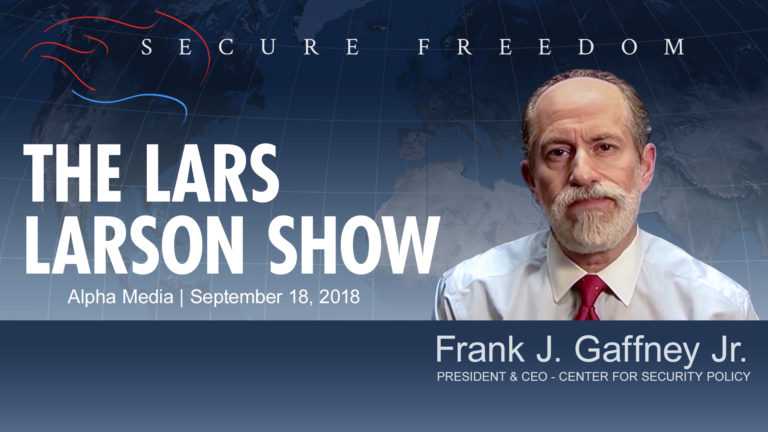
Frank J. Gaffney acted as an Assistant Secretary of Defense under President Ronald Reagan. He is currently the Executive Chairman of the Center for Security Policy and Vice Chairman of the Committee on the Present Danger: China.

Time to Designate Antifa a Terrorist Organization

Over the weekend, President Trump tweeted that he was considering designating the radical leftist group Antifa as a terrorist organization.

This is a good idea and can’t happen fast enough at this point.

The internet and social media are replete with acts of violence being perpetrated by Antifa thugs and it is high time that they were stopped, their personnel rolled up and charged with crimes and their supporters charged with material support for terrorism.

The latest incident represented a serious escalation in Antifa tactics when an Antifa member launched a firebomb attack at an ICE facility.

This can be done with either federal charges or state charges—and state charges may be better because there seem to be a lot more aggressive prosecutors on the state and local level in this country than exist in our Department of Justice.

In fact, there is some question as to whether leftists in government service would pursue Antifa the way they should.

You can’t find many Democrat leaders condemning Antifa. In fact, when asked, some have outright declined to do so. Prominent leftist politicians and media figures have met with and defended Antifa figures, despite their violent acts.

Antifa is getting more bold in their violence, seemingly feeling that there won’t be serious consequences for their actions. This indicates a very dangerous stage in the organization’s life cycle. When bullies, thugs and terrorists do not feel repercussions from their actions, they do more—and worse. This may already be happening with the new report that Antifa plans large-scale violence on the southern border near El Paso, Texas.

Antifa seems to believe that just about anyone who disagrees with them is a “fascist” and they believe that just about any method to attack “fascists” is justified.

As might be expected, Antifa has a presence on college campuses. But what might NOT be expected is that Antifa’s members include college faculty. Imagine the reaction if a member of just about any other group associated with violence was revealed as a member of a college faculty. How long would a member of the KKK stay on staff? Not long. A KKK member would be justifiably removed very quickly I suspect. Why does Antifa get a pass?

The best idea I’ve seen so far is Senator Ted Cruz’s call for the Justice Department to go after Antifa using RICO (Racketeer Influenced & Corrupt Organizations Act), which was designed to take down the Mafia and other organized crime syndicates.

If the Feds are slow to get started (which seems to be the case most of the time these days), many states (more than 30) have their own RICO statutes. It would be great if a sharp state attorney general or even a local district attorney would start rolling up the Antifa thugs using Senator Cruz’s idea.

Time is of the essence with the 2020 elections approaching. What are the odds that Antifa will lay low and not try to intimidate voters with acts of violence?

STAY THE COURSE ON CHINA: AN OPEN LETTER TO PRESIDENT TRUMP

The final version of the “Stay the Course on China:  An Open Letter to President Trump” was published on 18 July with over 130 signatures from a wide-group of fellow citizens with deck-plate experience in dealing with the People’s Republic of China (PRC).

This letter was crafted on the 4th of July in response to the 3 July open letter published by the WaPo entitled “Making China a U.S. enemy is counterproductive”.  The “Stay the Course” letter is openly challenging those who are advocating for ‘engagement/appeasement’ in U.S. foreign policy towards the PRC.  We believe their assessments about the PRC have been and continue to be wrong.  We also believe the unprecedented efforts this administration is making to confront an aggressive and expansionist PRC are necessary and in keeping with the history of this Republic and the allies we have around the globe.

This letter to the President has been published in the Journal of Political Risk, hosted by Dr. Anders Corr.

***To access the letter and signatures on-line please go to:  http://www.jpolrisk.com/stay-the-course-on-china-an-open-letter-to-president-trump

For all who receive this message and have not signed the letter, we would encourage you to go to the link, read the letter and sign it.  If you have already signed the letter, we would request you forward this e-mail and link to your network of associates and solicit their signatures.  It is our desire to make this letter go “viral” and get as many signatures as possible…in the thousands!

We would also like to make a special request to those who are not from the United States, as we especially welcome your support and signature on this letter.  We understand and believe in the vital importance our allies and friends make in standing up to the PRC and their destabilizing actions.

The text of the letter is as follows:

Stay the Course on China: An Open Letter to President Trump

Dear President Trump,

Over America’s exceptional history, successive generations have risen to the challenge of protecting and furthering our founding principles, and defeating existential threats to our liberties and those of our allies. Today, our generation is challenged to do the same by a virulent and increasingly dangerous threat to human freedoms – the Chinese Communist Party (CCP) through the nation it misrules:  the People’s Republic of China (PRC).

The Chinese Communists’ stated ambitions are antithetical to America’s strategic interests, and the PRC is increasingly taking actions that imperil the United States and our allies. The past forty years during which America pursued an open policy of “engagement” with the PRC have contributed materially to the incremental erosion of U.S. national security.

This cannot be permitted to continue.

China is not as we wish it to be. In our political system, politics is the norm, and war is the exception. It is explicitly the opposite in the PRC’s worldview. Going forward, we must better understand and deal with this dangerous asymmetry.

We the undersigned, are encouraged by the broad and coherent strategy of robust, alternative policies you have adopted to confront the PRC’s campaign to undermine the national interests of the United States and its allies. We encourage you to stay the course on your path of countering Communist China.

We acknowledge and support your robust National Security Strategy that properly sets forth why the United States must counter the PRC. Opposing the advance of tyranny is fully in keeping with the founding principles of America and our rich heritage of defending freedom and liberty, both at home and, where necessary, abroad.

We note the PRC does not recognize the principles and rules of the existing international order, which under a Pax Americana has enabled the greatest period of peace and global prosperity in mankind’s history. The PRC rejects this order both ideologically and in practice. China’s rulers openly proclaim and insist on a new set of rules to which other nations must conform, such as their efforts to dominate the East and South China Seas and the so-called “Belt and Road Initiative,” with its debt-trap diplomacy, designed to extend such hegemony worldwide. The only persistently defining principle of the CCP is the sustainment and expansion of its power.

Over the past forty years of Sino-American relations, many American foreign policy experts did not accurately assess the PRC’s intentions or attributed the CCP’s reprehensible conduct to the difficulties of governing a country of 1.3 billion people. American policymakers were told time and again by these adherents of the China-engagement school that the PRC would become a “responsible stakeholder” once a sufficient level of economic modernization was achieved. This did not happen and cannot so long as the CCP rules China.

The PRC routinely and systematically suppresses religious freedom and free speech, including the imprisonment of over one million citizens in Xinjiang and the growing suppression of Hong Kong’s autonomy. The PRC also routinely violates its obligations, as it does with the World Trade Organization, freedom of navigation and the protection of coral reefs in the South China Sea. Beijing then demands that its own people and the rest of the world accept their false narratives and justifications, demands aptly termed as “Orwellian nonsense.”

The PRC is not and never has been a peaceful regime. It uses economic and military force – what it calls its “comprehensive national power” – to bully and intimidate others. The PRC threatens to wage war against a free and democratically led Taiwan.

It is expanding its reach around the globe, co-opting our allies and other nations with the promise of economic gain, often with authoritarian capitalism posing as free commerce, corrupt business practices that go-unchecked, state-controlled entities posing as objective academic, scientific or media institutions and trade and development deals that lack reciprocity, transparency and sustainability. The CCP corrupts everything it touches.

This expansionism is not random or ephemeral. It is manifestly the unfolding of the CCP’s grand strategy. The Party’s ambitions have been given many names, most recently the “China Dream,” the “great rejuvenation” of China, or the “Community of Common Destiny.” The “Dream” envisioned by the Communist Party is a nightmare for the Chinese people and the rest of the world.

We firmly support the Chinese people, the vast majority of whom want to live peaceful lives.

But we do not support the Communist government of China, nor its control by the dangerous Xi Jinping clique. We welcome the measures you have taken to confront Xi’s government and selectively to decouple the U.S. economy from China’s insidious efforts to weaken it. No amount of U.S. diplomatic, economic, or military “engagement” will disrupt the CCP’s grand strategy.

If there is any sure guide to diplomatic success, it is that when America leads—other nations follow. If history has taught us anything it is that clarity and commitment of leadership in addressing existential threats, like from the PRC, will be followed by our allies when policy prescriptions such as yours become a reality. The PRC’s immediate strategy is to delay, stall, and otherwise wait out your presidency. Every effort must be made therefore to institutionalize now the policies and capabilities that can rebalance our economic relations with China, strengthen our alliances with like-minded democracies and ultimately to defeat the PRC’s global ambitions to suppress freedom and liberty.

Stay the Course!

Let’s Do Some Good

Originally posted on ANDMagazine.com

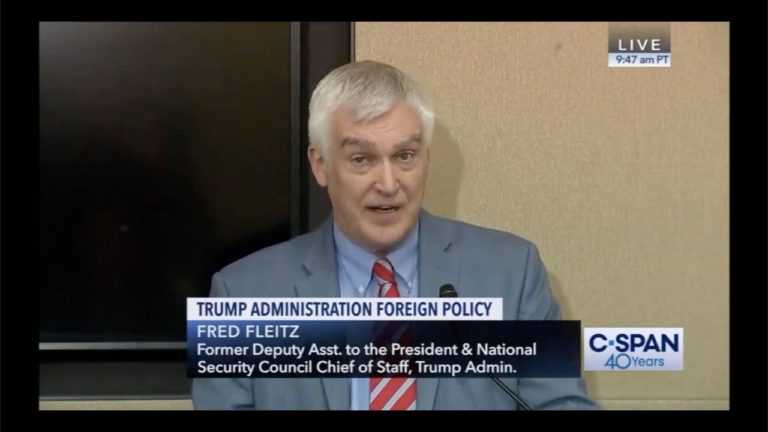
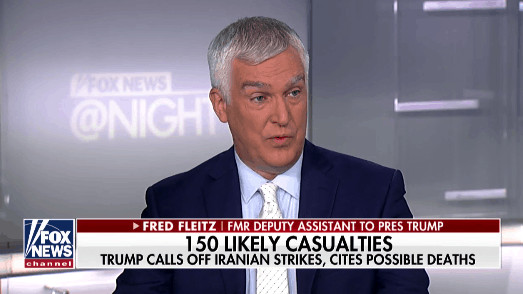
Speculation is rife in the press that President Trump is about to fire the Director of National Intelligence, Dan Coats and replace him with “arch Muslim-hater,” Fred Fleitz, a former Central Intelligence Agency analyst. Rumors abound as well that it will be Fleitz’s job to preside over the demise of the Office of the Director of National Intelligence (ODNI) and phase it out of existence.

God, let’s hope that for once the press corps has it right.

Who Is Fred Fleitz?

First, Fred Fleitz is by no means an enemy of Islam or a radical of any stripe. He is a sober, well respected analyst with a wealth of experience and the backbone to match. If he is derided by much of the media and establishment Washington it is because he has had the audacity to speak the truth and to point out the danger in which we and the civilized world find ourselves. Having already served on the National Security Council in this Administration, if he has the stomach to continue the fight for change in Washington and to subject himself to the attacks that will be launched against him, we should count ourselves lucky.

Click HERE to read more

An EMP Attack Could Be Catastrophic

In a world powered by technology, it is difficult to imagine life without it, but it might be necessary to try.

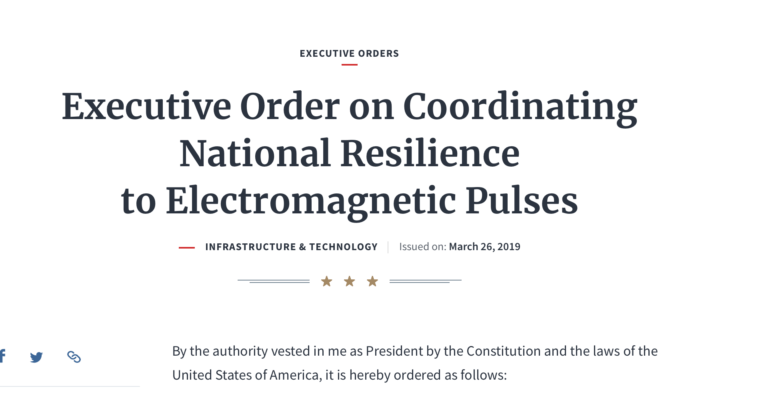
President Trump recently issued an Executive Order to protect the nation from an electromagnetic pulse (EMP) attack. An EMP is an intense pulse of electromagnetic energy created by the high-altitude explosion of a nuclear bomb. Unlike detonating a nuclear bomb on the ground or immediately above a city, a high-altitude detonation produces no blast effects or radiation that would affect humans. The blast and the radiation released from it into space would cause permanent damage to satellites and create a series of pulses harmful to electronics. The Congressional EMP Commission found that a single nuclear explosion at a high altitude above the U.S. would severely damage electrical and informational systems.

Back-up power systems at hospitals would likely malfunction or only last as long as their fuel supply. Many vehicles would fail to operate properly, and drivers would be unable to refuel. ATMs would not allow access to money, and the availability of clean water would quickly become a concern. Raw sewage would begin to back up in homes and facilities, and with agricultural production and transportation at a standstill, the food supply would soon diminish. Back-up generators and cooling systems for nuclear power plants could fail or run out of fuel, which would put millions of Americans at risk of radiation exposure. “A successful nuclear electromagnetic pulse (EMP) attack against the United States could cause the death of approximately 90 percent of the American population,” according to a Senate Homeland Security Committee statement.

Attempts by the federal government to establish policies to prepare for such an attack have been made difficult due to the combination of public and private actors involved. Though technology to secure the grid is available, implementation is a challenge.  A collective national plan to secure the grid requires the cooperation of electric companies, system operators, technology companies, and Congress. Since this issue limits how the U.S. can effectively prevent catastrophic effects of EMP attacks, the nation remains vulnerable to them.

President Trump’s recent Executive Order mandates federal agencies to coordinate with each other to develop a whole-of-government approach to assessing and managing the risks of EMP. It outlines the individual roles and responsibilities of major federal departments to successfully mitigate the risks. The Executive Order states that within one year, President Trump will receive a report from heads of appropriate agencies detailing the available technology options that could be used to harden the electric grid and protect critical infrastructure. Within 180 days of analyzing those options, an engineering approach will be taken to implement technologies.

Trump’s Executive Order marks the first comprehensive plan involving public and private sectors to assess the EMP threat – the first step to effectively defending against it.

Fred Fleitz: Trump proves critics wrong as he advances his North Korea policy with Kim meeting

Originally posted on Fox News

The failed summit in Vietnam last February between President Trump and North Korean leader Kim Jong Un led some Trump opponents to criticize his North Korea policy. They were too quick to reach judgment.

Trump knew he was on the right track and doubled down by meeting Sunday with Kim at the Demilitarized Zone dividing North and South Korea. The U.S. president understands that while his North Korea policy has not reached its ultimate goal of complete denuclearization of the North, it has made important progress.

North Korea has not tested a nuclear device since September 2017. And aside from a few short-range missiles that the North tested in anger over the breakdown of the Vietnam summit, there have been no North Korean missile launches since November 2017.

The odds may still be long to reach an agreement that fully denuclearizes North Korea. But President Trump’s unorthodox diplomacy has significantly lowered tensions from the dangerous level he inherited from President Obama and opened a door to peace that no one thought possible.

Just as important, President Trump’s diplomacy with North Korea has significantly eased tensions on the Korean Peninsula and reduced the chances of an accidental war. This is readily apparent by the vastly different DMZ visits by Presidents Barack Obama and Trump.

Trump met Kim at the DMZ and openly walked into North Korean territory, becoming the first sitting American president to set foot in that country. By contrast, when President Obama visited the DMZ in 2012, he looked into North Korea with binoculars and through bulletproof glass.

The odds may still be long to reach an agreement that fully denuclearizes North Korea. But President Trump’s unorthodox diplomacy has significantly lowered tensions from the dangerous level he inherited from President Obama and opened a door to peace that no one thought possible.

Trump also believes the Vietnam summit was a partial success, since it allowed him to make clear to Kim the main requirement for an acceptable agreement: complete denuclearization of the North.

Unlike Trump’s critics who predicted that North Korea would never resume talks with the U.S. after the breakdown of the Vietnam summit, the president always believed the talks would resume. This is why he ignored North Korea’s hostile rhetoric and short-range missile launches after the summit in Vietnam.

Instead, Trump voiced his optimism that his personal relationship with Kim would eventually lead to an agreement. Trump let Kim blow off steam until the North Korean leader was ready to resume negotiations.

Trump gambled that he could bring about a resumption of negotiations by offering to meet with Kim at the DMZ after the G20 summit in Japan. Trump didn’t know if Kim would show up, but was willing to take the risk of seeing his offer rejected.

The hastily arranged meeting also was a security nightmare for the Secret Service. If Kim decided to have Trump killed, it is unlikely the Secret Service could have protected the American president.

Trump’s gamble paid off. What was supposed to be a brief handshake and photo op at the border turned into a nearly hour-long meeting during which the two leaders agreed to restart negotiations in the next few weeks.

President Trump said “speed is not an object” to reach an agreement. He also invited Kim to visit him at the White House.

U.S. negotiators now have a tough road ahead of them. Their North Korean counterparts are likely to resist meeting the tough terms President Trump has set for a denuclearization agreement and will push for a much weaker agreement, as well as making demands the U.S. cannot accept.

The talks could easily stall or fail again. Trump’s negotiators also know that given North Korea’s long record of violating prior agreements, a new agreement will have to be ironclad. with extremely strong verification provisions.

Perhaps Kim will never choose to walk through that door. But perhaps the confidence-building that President Trump has initiated with his personal diplomacy will convince Kim to make a denuclearization deal that formally ends hostilities and allows North Korea to join the community of nations.

Only a dealmaker president could have brought our nation to the brink of such a momentous possibility for peace with North Korea. All Americans should hope President Trump succeeds, because his success in this important endeavor would enhance U.S. national security.